The Bitcoin/Crypto Thread
-
Bitcoin has plummeted sharply amid fears U.S involvement in the Israel-Iran conflict could escalate into a wider regional war (adding to volatility expected from an imminent Federal Reserve earthquake).
The bitcoin price, after shrugging off the initial exchange of fire between Israel and Iran, has crashed under $100,000 per bitcoin despite U.S. president Donald Trump confirming a "massive" game-changer this week. Ethereum, XRP and other major cryptocurrencies have also plummeted, wiping $250 billion from the combined market in just 24 hours.
My question - who cares? Unless you have a high amount invested in bitcoin, does it really matter? If it drops to lets say, USD $10000, will it have any effect on the world economy? For me, I dont think so.
-
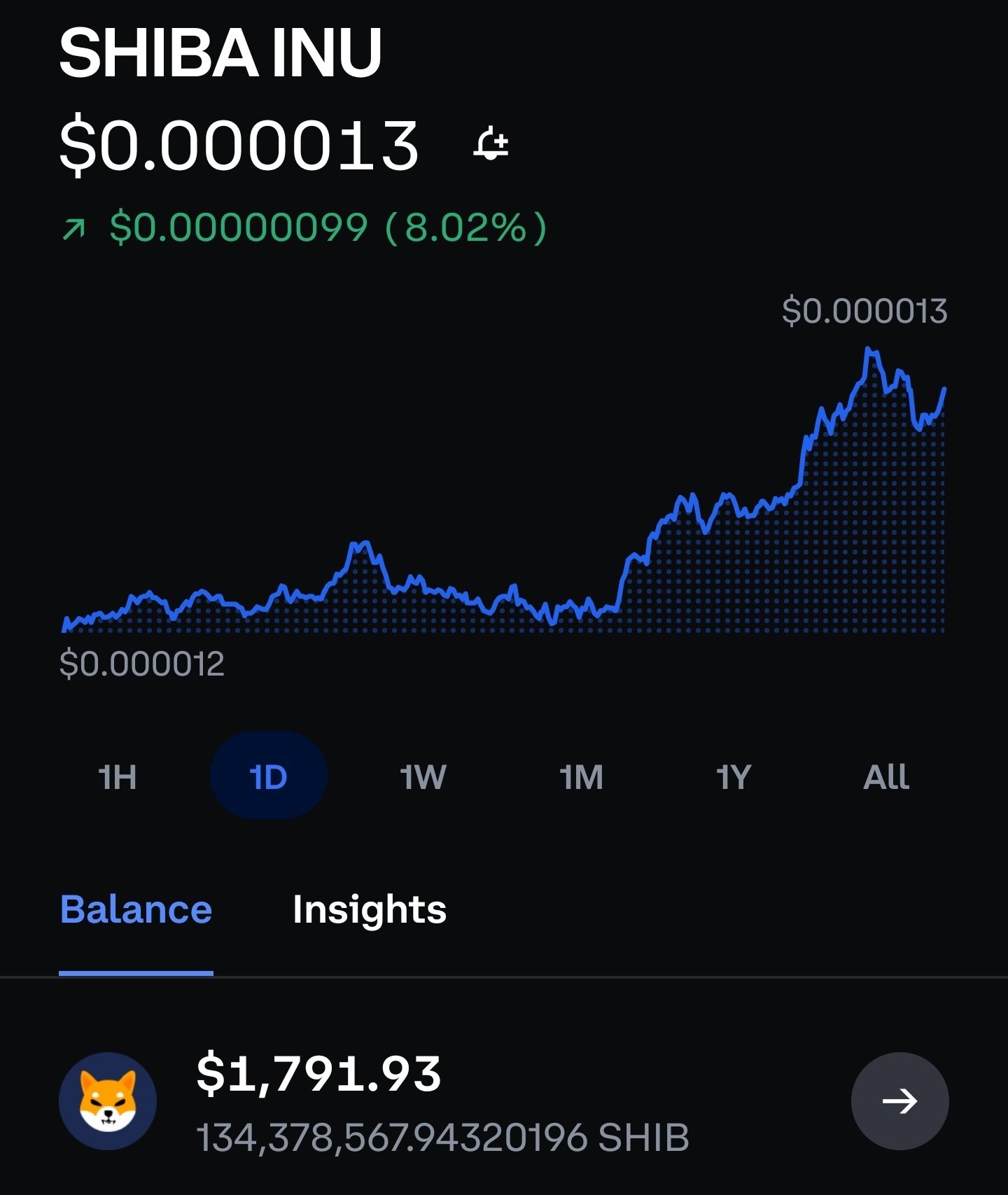
Bitcoin above $114,000 today. I haven't checked my coinbase balance in a while (it'll be something I check in the 2030s and then maybe cash out) but checked today.... nothing crazy but since 2021 I'm up like 230%. Not too bad. I'm still waiting for SHIBU to go to the moon so I can retire early with @mark
-
I wish these people would speak in plain English rather than use all this technobabble.
-
-
Plain English has been failing at keeping up with technology advancements. Heck, practically all natural languages have the same problem. There will always be subject matter that less than .01% of the population understand. "Plain language" is developed to accommodate the middle one to three sigmas of the general population. There will always be cases when plain language simply cannot do a subject matter justice.
-
But if you really want that compromise to get some aspects of a message across to the middle one to three sigmas of the general population, sure, try a "plain language" approximation. AI can probably do that quite well most of the time these days.
-
-
-
Well it’s not technically just in its current form.
Shor’s algorithm breaks the math underlying most public key cryptography. But today it requires millions of years of computation whereas a sufficiently powerful quantum computer could do it in hours or less.
Person. Woman. Man. Camera. TV.
-
Why does this mean blockchain is doomed?
Only blockchains of certain implementations are doomed. Google's work is fairly specific about cracking the ECDSA 256-bit encryption method in a reasonable amount of time using a quantum computer that Google believes will come into existence sometime in 2029. Blockchains that use the ECDSA 256 (or fewer) bits encryption methods will be "doomed" if/when their underlying encryption can be broken in a reasonable amount of time -- using a quantum computer that may come into existence in 2029.
But blockchain as a general concept will continue to have a place in technology and industrial applications. The U.S. government, especially through NIST, is spearheading the world-leading effort to standardize a bunch of new encryption methods that are expected to be "quantum resistant" -- i.e., encryption methods that even quantum computers cannot break for a very long time. New blockchains can be implemented using these quantum-resistant encryption methods and continue to be secure in the face of quantum computers.
-
Well it’s not technically just in its current form.
Shor’s algorithm breaks the math underlying most public key cryptography. But today it requires millions of years of computation whereas a sufficiently powerful quantum computer could do it in hours or less.
Well it’s not technically just in its current form.
Shor’s algorithm breaks the math underlying most public key cryptography. But today it requires millions of years of computation whereas a sufficiently powerful quantum computer could do it in hours or less.
With a 500K qubit computer, which is completely unknown whether that's ever going to work. Nobody knows whether quantum computing will ever be practically useful. I highly doubt we'll have a 500k qubit computer in the 2030s.
Also, cryptographic algorithms can be changed. It just requires a "hard fork" of the blockchain.
-
Well it’s not technically just in its current form.
Shor’s algorithm breaks the math underlying most public key cryptography. But today it requires millions of years of computation whereas a sufficiently powerful quantum computer could do it in hours or less.
With a 500K qubit computer, which is completely unknown whether that's ever going to work. Nobody knows whether quantum computing will ever be practically useful. I highly doubt we'll have a 500k qubit computer in the 2030s.
Also, cryptographic algorithms can be changed. It just requires a "hard fork" of the blockchain.
-
Quantum computing is way overrated in my opinion. Even if we'd have working quantum computers with millions of qbits, nothing really extraordinary would change. We'd have to upgrade some crypto technology to be quantum resistant. We'd set a few new records in finding large primes. And a few narrow applications, such as certain simulations, would become faster. But it's far from being a general purpose "make my program run faster" machine.







Hello! It looks like you're interested in this conversation, but you don't have an account yet.
Getting fed up of having to scroll through the same posts each visit? When you register for an account, you'll always come back to exactly where you were before, and choose to be notified of new replies (either via email, or push notification). You'll also be able to save bookmarks and upvote posts to show your appreciation to other community members.
With your input, this post could be even better 💗
Register Login