Mildly interesting
-
@jon-nyc said in Mildly interesting:
That’s a pointless and useless statistic.
-
in 1989, the 70+ crowd was the Greatest Generation, which was decimated by two wars, and higher mortality from any number of causes. Today, the 70+ crowd are the boomers, much more plentiful in numbers, so it’s only natural for a higher percentage of the wealth is in their hands.
-
in 1989, the average mortgage interest rate was/is 10.25%, so all of these people bitching about interest rates as a cause for the affordability crisis can bite me.
-
As @Mik points out, a percentage of how much?
-
I think I’m typing this post on one of the biggest reasons for the wealth gap. When I was in my 20s, I wasn’t having to buy a $1K phone every 4 years, a new computer every 4-5 years, and spending thousands of dollars on internet and data plans every year. These days it’s expected…
-
-
Google says:
In the USA, the percentage of the population aged 70 and older was approximately 9.1% in 1989 and is projected to be around 11.33% in 2025. The share of the older population has increased over this period due to increased life expectancy and the aging of the baby boomer generation.
Percentage of Population in 1989
Based on population data, the approximate percentages for age groups 70 and older in 1989 were:• 70-74 years: 3.5%
• 75-79 years: 2.8%
• 80-84 years: 2.2%
• 85+ years: approximately 0.6% to 0.9% (extrapolated from data) [4]The total percentage of the population aged 70 and older in 1989 was approximately $3.5% + 2.8% + 2.2% + 0.6% = 9.1%.
Percentage of Population in 2025
For 2025, projected data provides a more precise breakdown:• 70-74 years: 4.5%
• 75-79 years: 3%
• 80-84 years: 1.91%
• 85+ years: 1.92% [7]The total percentage of the population aged 70 and older in 2025 is approximately $4.5% + 3% + 1.91% + 1.92% = 11.33%.
AI responses may include mistakes.
[1] https://www.pewresearch.org/social-trends/2025/11/06/how-americans-are-thinking-about-aging/
[2] https://www.statista.com/statistics/457822/share-of-old-age-population-in-the-total-us-population/
[3] https://www.facebook.com/OfficialPeterMallouk/photos/a-record-32-of-household-wealth-is-now-held-by-americans-that-are-70-years-of-ag/1378770223686396/
[4] https://www.populationpyramid.net/united-states-of-america/1989/
[5] https://www.ssa.gov/oact/NOTES/AS112/as112.html
[6] https://www.cato.org/blog/native-born-americans-are-not-losing-jobs-foreigners
[7] https://www.neilsberg.com/insights/united-states-population-by-age/ -
Wealth accumulates for the 70+ crowd faster than the population growth for the 70+ crowd.
While this does not necessarily suggest "inequity," it does indicate "increased concentration" of wealth for the 70+ crowd.Wealth in pension funds vs. wealth in 401(k)? That comes down to control. The wealth in pension funds meant to benefit the 70+crowd is not controlled by the 70+ crowd. The wealth in 401(k) accounts of the 70+ crowd is controlled by the 70+ crowd. Is one "better" than the other? That's a whole other discussion.
-
Meanwhile in Spain, one community raises alms for the poor:
-
The Hot Dogs Were So Addictive They Had to Be BANNED from Helen Keller’s House
Helen Keller is remembered as one of the most extraordinary figures of the modern world. Deaf and blind from a young age, she became a prolific author, a tireless activist, and a global lecturer who spoke fiercely against war, inequality, and capitalist injustice. But behind the public icon was a woman with a very simple, very human weakness. She loved hot dogs.
Despite traveling the world and dining in countless countries, Keller’s favorite protein was reportedly the humble American hot dog. According to accounts preserved by the Helen Keller Foundation, she preferred them topped with mustard and relish. No record survives of her stance on ketchup, a mystery that will likely never be resolved. What is clear is that she adored them with enthusiasm.
Her love for hot dogs became such a problem that her longtime secretary and companion, Polly Thomson, eventually banned them from their home altogether. Thomson worried that if allowed, Keller would eat nothing else. It was not a symbolic ban. It was a practical intervention against culinary obsession.
After Thomson’s death in 1960, Keller’s new assistant, Winifred Corbally, took a different approach. Rather than restricting her employer’s cravings, she embraced them. Corbally frequently took Keller to hot dog stands, indulging her favorite food without guilt or restraint. Keller reportedly had one request she repeated often. “Don’t forget the mustard.”
-
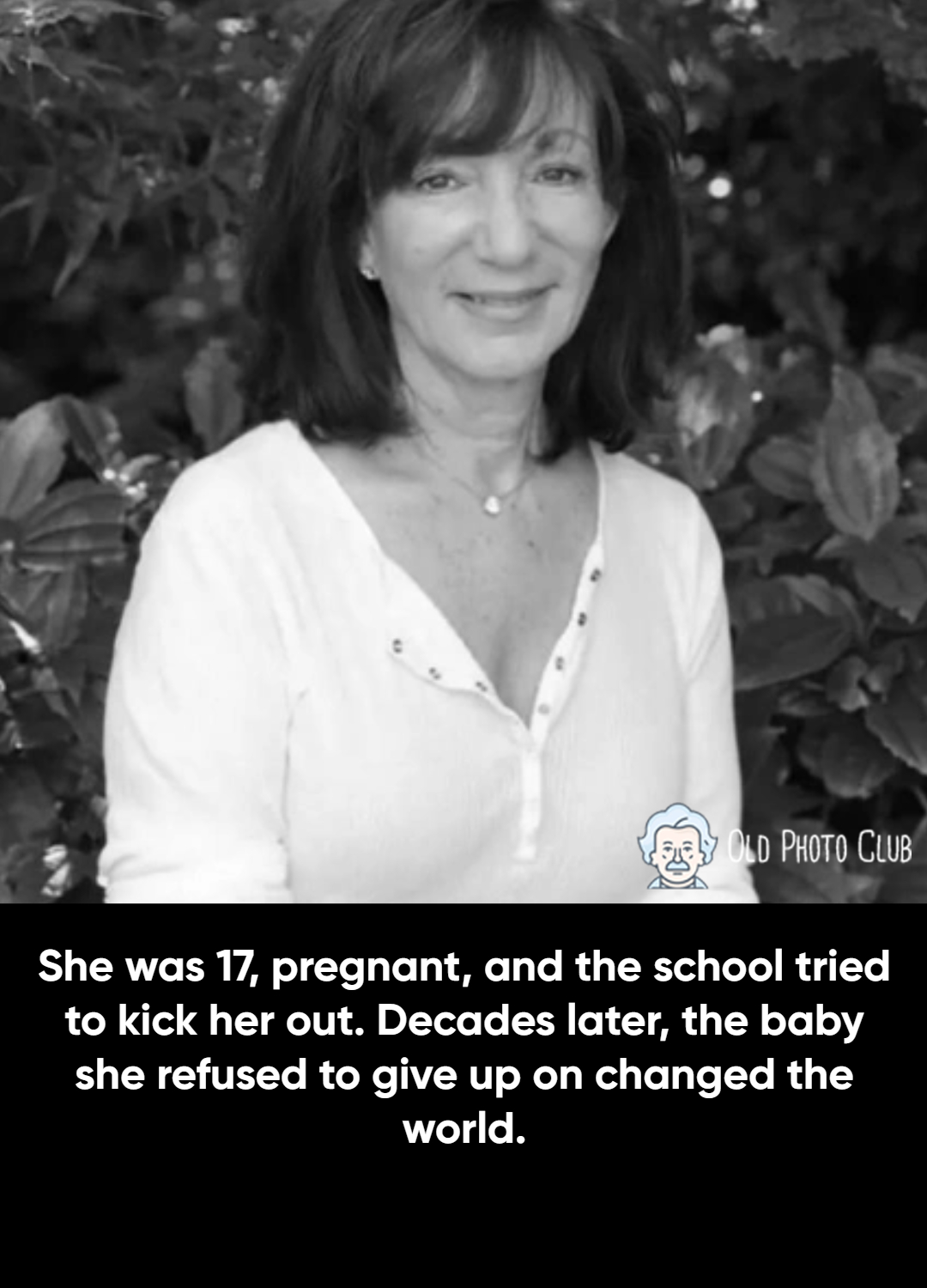
In 1964, in Albuquerque, New Mexico, a 17-year-old girl gave birth to a son. The school administrators had told her she couldn't finish high school. She pushed back anyway.
Her name was Jacklyn Gise. And the baby she was determined to raise would one day become one of the most influential people on Earth.
Being a pregnant teenager in 1960s Albuquerque wasn't just difficult — it was scandalous. When Jacklyn tried to return to school after giving birth, the administration told her no. She didn't accept that answer.
"I pushed back and I kept on pushing back," she would later recall. "Eventually the school relented."
But there were conditions. She couldn't talk to other students. She couldn't eat in the cafeteria. She had to arrive and leave within five minutes of the bells. She agreed to all of it. And she graduated.
Her marriage to her son's biological father, Ted Jorgensen, didn't survive. They were both teenagers when they married. He struggled with alcohol. They divorced before Jeff was even two years old.
Suddenly, Jacklyn was a single mother with no money. She found work as a secretary, earning $190 a month. It was barely enough to afford rent. She couldn't even pay for a telephone. Her father rigged up a walkie-talkie system so she could check in with her parents every morning at 7 a.m.
"That's how we were able to stay in an apartment," she later explained. "Because I didn't have to pay for a phone."
Determined to continue her education, Jacklyn enrolled in night school. She chose her classes based on which professors would let her bring her infant son to class. She would show up with two duffel bags — one filled with textbooks, the other with cloth diapers, bottles, and toys to keep baby Jeff occupied.
It was in one of those night classes that she met a young Cuban refugee named Miguel Bezos. He had arrived in the United States at age 15, fleeing Castro's regime with almost nothing. They fell in love.
Mike, as everyone called him, adopted Jeff and gave him his name. Together, Jacklyn and Mike built a home where hard work, education, and big dreams were the foundation of everything.
Jacklyn never stopped learning. Even after putting her college dreams on hold to raise her family and support Mike's career, she went back. In her late thirties, she enrolled again. She was relentless. At age 40, Jacklyn Bezos finally earned her college degree.
"When I graduated from the College of Saint Elizabeth at the age of 40," she said, "I had never been more proud of myself."
Then, in 1995, her oldest son came to her and Mike with a proposal that sounded risky. Jeff wanted to quit his stable Wall Street job to start a company selling books on the internet. Most people had barely heard of the internet. Almost no one was shopping on it.
He told his parents there was a 70% chance the company would fail. They invested anyway.
Jacklyn and Mike put approximately $245,000 into their son's startup. It was an enormous leap of faith. If Jeff was right about the odds, they would lose everything.
The company was called Amazon.
By 2018, that investment had grown to approximately $30 billion.
But the money was never the point for Jacklyn.
Jeff Bezos has spoken publicly about his mother countless times. He called her story "incredible." He credits her not just for the financial investment, but for the foundation she built — the values she instilled, the example she set, the sacrifices she made when he was too young to understand them.
Jacklyn Bezos never sought the spotlight. While her son became one of the most recognizable people on the planet, she worked quietly behind the scenes. She co-founded the Bezos Family Foundation, donating hundreds of millions to education and health causes. She championed opportunities for young people, especially those who faced obstacles like she once did.
She passed away in August 2025 at the age of 78, after battling Lewy body dementia. Her son announced her death with a simple tribute: "She pounced on the job of loving me with ferocity."
Jacklyn Bezos's life proves something important about parenting.
The most valuable gift you can give your children isn't money. It's showing them what's possible by refusing to accept what others say is impossible.
She was a teenage mother who society might have written off. Instead, she raised a son who changed the world — and she did it by changing hers first. -
It is.
By odd coincidence, this is the opening sentence of his column today.
The Democratic Party’s future — if it wants one; the evidence is mixed — should be based on candidates who understand that U.S. politics, when healthy, takes place between the 40-yard lines, contesting the center of the field.
Lo, no accord shall bloom 'twixt us and that realm, save they do kneel in token of their utter, soul-deep shame! No parley shall we hold, no treaty sign, until their will is broken, and their strength doth lie as dust before our might. -DJT, 3/6/26






Hello! It looks like you're interested in this conversation, but you don't have an account yet.
Getting fed up of having to scroll through the same posts each visit? When you register for an account, you'll always come back to exactly where you were before, and choose to be notified of new replies (either via email, or push notification). You'll also be able to save bookmarks and upvote posts to show your appreciation to other community members.
With your input, this post could be even better 💗
Register Login