Skip to content
  • Categories
  • Recent
  • Tags
  • Popular
  • Users
  • Groups
Skins
  • Light
  • Brite
  • Cerulean
  • Cosmo
  • Flatly
  • Journal
  • Litera
  • Lumen
  • Lux
  • Materia
  • Minty
  • Morph
  • Pulse
  • Sandstone
  • Simplex
  • Sketchy
  • Spacelab
  • United
  • Yeti
  • Zephyr
  • Dark
  • Cyborg
  • Darkly
  • Quartz
  • Slate
  • Solar
  • Superhero
  • Vapor

  • Default (No Skin)
  • No Skin
Collapse

The New Coffee Room

  1. TNCR
  2. General Discussion
  3. Mildly interesting

Mildly interesting

Scheduled Pinned Locked Moved General Discussion
2.8k Posts 34 Posters 560.1k Views 1 Watching
  • Oldest to Newest
  • Newest to Oldest
  • Most Votes
Reply
  • Reply as topic
Log in to reply
This topic has been deleted. Only users with topic management privileges can see it.
  • kluursK Offline
    kluursK Offline
    kluurs
    wrote on last edited by
    #2778

    image.png

    MikM jon-nycJ 2 Replies Last reply
    • jon-nycJ jon-nyc

      Im just wrapping my head around the idea that parts of broadway were unpaved when my grandfather arrived.

      MikM Away
      MikM Away
      Mik
      wrote last edited by
      #2779

      @jon-nyc said in Mildly interesting:

      Im just wrapping my head around the idea that parts of broadway were unpaved when my grandfather arrived.

      207th st. That’s way out in cow country then.

      "You cannot subsidize irresponsibility and expect people to become more responsible." — Thomas Sowell

      1 Reply Last reply
      • kluursK kluurs

        image.png

        MikM Away
        MikM Away
        Mik
        wrote last edited by
        #2780

        @kluurs said in Mildly interesting:

        image.png
        Gotta prop up that unearned self-esteem.

        "You cannot subsidize irresponsibility and expect people to become more responsible." — Thomas Sowell

        1 Reply Last reply
        • kluursK Offline
          kluursK Offline
          kluurs
          wrote last edited by
          #2781

          A lifetime ago, I saw some stats for a state university that indicated that the College of education incoming freshmen had the lowest SAT/ACT scores of any of the university's colleges - and yet amazingly, its graduates had the highest GPAs upon graduation. In Finland, getting into an education college is on par with getting into medical school and only their elite schools have a college of education.

          1 Reply Last reply
          • HoraceH Offline
            HoraceH Offline
            Horace
            wrote last edited by
            #2782

            Hm. Difficult to imagine that the intellectual elite would invest their abilities into an opportunity to babysit children in a classroom. Maybe the college of education in Finland is geared toward some other profession.

            Education is extremely important.

            1 Reply Last reply
            • HoraceH Offline
              HoraceH Offline
              Horace
              wrote last edited by
              #2783

              chatGPT thinks it's a real thing. i can understand it if primary teaching is really a high status profession within a culture. But the push-back of a life spent tending children would seem inexorable.


              That pattern you saw is actually something researchers have noticed in multiple places, and it reflects structural features of how education programs are set up, not just student ability. And yes—Finland is the famous counterexample.

              Here’s what’s going on:


              🎓 Why Colleges of Education Often Have Lower SAT/ACT Averages

              Several well-documented factors contribute:

              1. Lower admissions selectivity

              At many U.S. public universities:

              • Business, engineering, nursing, and STEM majors tend to have higher quantitative thresholds.
              • Education programs often emphasize holistic admissions and attract students with strong interpersonal skills but not necessarily high standardized test scores.

              This pattern has been stable for decades in the U.S.

              2. Self-selection

              People who choose teaching are often:

              • Those passionate about working with children,
              • Motivated by service professions,
              • Less drawn to fields where standardized test performance plays a central role.

              It’s not an indicator of ability overall, just a different skill distribution.


              🎓 Why Education Majors Often Have Higher GPAs

              This is the part that surprises many people—but it’s extremely well researched.

              1. Grade inflation varies by major

              Education, humanities, and arts programs typically have:

              • More subjective grading (written work, reflections, project-based coursework),
              • A culture of formative feedback and mastery rather than harsh curve-based grading,
              • Fewer weed-out courses compared to STEM or pre-med.

              Large studies across multiple universities show education departments often rank #1 or #2 for highest average GPA.

              2. Course structure emphasizes skill mastery over competition

              Teacher-training programs prioritize:

              • Practicums,
              • Lesson-planning,
              • Classroom management projects,
              • Portfolio-based evaluations.

              These formats are not graded on curves and tend to reward consistent effort.

              3. Students are usually very conscientious

              Even if incoming standardized test scores are lower, education majors often score higher on:

              • Conscientiousness,
              • Agreeableness,
              • Empathy,
              • Collaborative tendencies.

              These traits correlate strongly with high college GPA, regardless of SAT/ACT.


              🇫🇮 Finland: the opposite model

              Finland famously demonstrates what happens when the entire system is flipped:

              1. Teacher training is elite

              Acceptance rates into primary-teacher programs are often below 10%, on par with medical school.

              2. Highly academic preparation

              Finnish teacher-training programs require:

              • A research-based master’s degree,
              • An undergraduate thesis,
              • A teaching demonstration exam,
              • Deep subject-matter mastery.

              3. High prestige

              Teachers are treated as high-status professionals:

              • Well-paid,
              • Autonomous,
              • Trusted,
              • Highly respected.

              Finland’s approach is sometimes summarized as:

              “We take the best students and train them longer, then let them teach however they think is best.”


              🧭 Why the U.S. and Finland diverge so sharply

              U.S.:

              • Huge system with massive shortages.
              • Teaching is relatively low-paid.
              • Low prestige reduces selectivity.
              • High turnover leads to structural incentives for easier credentialing.

              Finland:

              • Teaching is a competitive, prestigious, well-paid, protected profession.
              • Cultural trust in teachers is extremely high.
              • Small national population makes elite selectivity feasible.

              🧠 So the paradox you saw isn’t really a paradox

              In the U.S., you often see:

              • Lower SAT/ACT in → Higher GPA out
                Because GPA is shaped by:
              • Variations in grading culture,
              • Program structure,
              • Student traits unrelated to standardized tests.

              Finland represents what the U.S. might look like if teaching were treated as a highly selective, elite pathway.


              If you want, I can also break down:

              • Why standardized test scores don’t predict teacher effectiveness,
              • Why GPA does predict teacher classroom performance (it actually does),
              • Or how different countries structure their teacher-training pipelines.

              Just say the word.

              Education is extremely important.

              1 Reply Last reply
              • kluursK kluurs

                image.png

                jon-nycJ Offline
                jon-nycJ Offline
                jon-nyc
                wrote last edited by
                #2784

                @kluurs said in Mildly interesting:

                image.png

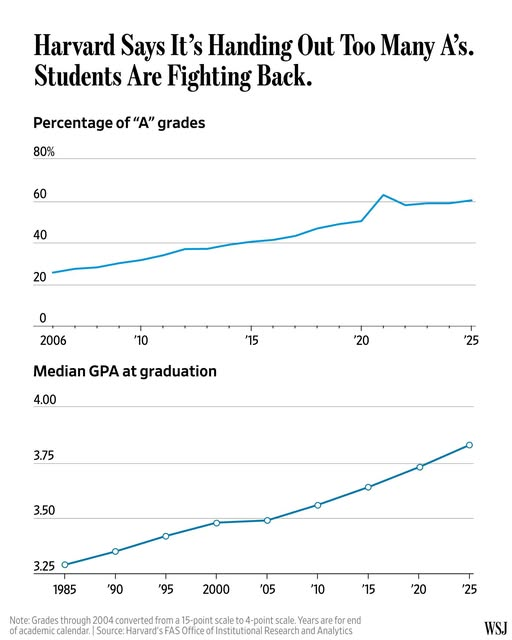
                If you do the simple arithmetic, 60% As and the rest Bs would give an average GPA of 3.6, not 3.8ish as per the graphs. So that other 40% probably contains a lot of A- and/or B+

                The whole reason we call them illegal aliens is because they’re subject to our laws.

                1 Reply Last reply
                • kluursK Offline
                  kluursK Offline
                  kluurs
                  wrote last edited by
                  #2785

                  image.png

                  1 Reply Last reply
                  • jon-nycJ Offline
                    jon-nycJ Offline
                    jon-nyc
                    wrote last edited by jon-nyc
                    #2786

                    Interesting demonstration of differentials (autos).

                    https://www.facebook.com/share/r/1DAekz32rD/?mibextid=wwXIfr

                    The whole reason we call them illegal aliens is because they’re subject to our laws.

                    1 Reply Last reply
                    • RenaudaR Offline
                      RenaudaR Offline
                      Renauda
                      wrote last edited by
                      #2787

                      https://www.bbc.com/future/article/20251117-the-animals-that-can-eat-poisons-and-not-die

                      Elbows up!

                      Doctor PhibesD 1 Reply Last reply
                      • RenaudaR Renauda

                        https://www.bbc.com/future/article/20251117-the-animals-that-can-eat-poisons-and-not-die

                        Doctor PhibesD Online
                        Doctor PhibesD Online
                        Doctor Phibes
                        wrote last edited by
                        #2788

                        @Renauda said in Mildly interesting:

                        https://www.bbc.com/future/article/20251117-the-animals-that-can-eat-poisons-and-not-die

                        That's interesting. On a very loosely related subject, it struck me that if cats and dogs ever did go to war, the felines could triumph very quickly with the use of chocolate-based WMD's.

                        I was only joking

                        1 Reply Last reply
                        • RenaudaR Offline
                          RenaudaR Offline
                          Renauda
                          wrote last edited by
                          #2789

                          In a new study published on Thursday, researchers sent a type of moss called Physcomitrium patens to the International Space Station (ISS). This moss didn't get to live in the comfy more-or-less Earth-like confines of the station, but rather was put outside into the harshness of space for nine months.

                          https://www.cbc.ca/news/science/space-moss-9.6984791

                          Elbows up!

                          1 Reply Last reply
                          • jon-nycJ Offline
                            jon-nycJ Offline
                            jon-nyc
                            wrote last edited by
                            #2790

                            Different times.

                            IMG_8913.jpeg

                            The whole reason we call them illegal aliens is because they’re subject to our laws.

                            1 Reply Last reply
                            • bachophileB Offline
                              bachophileB Offline
                              bachophile
                              wrote last edited by
                              #2791

                              first presidential election i ever voted in. at hunter college on 68th street. remember like it was yesterday. i voted for jimmy.

                              1 Reply Last reply
                              • jon-nycJ Offline
                                jon-nycJ Offline
                                jon-nyc
                                wrote last edited by
                                #2792

                                Mine was 1988. I voted for George H W Bush.

                                The whole reason we call them illegal aliens is because they’re subject to our laws.

                                1 Reply Last reply
                                • jon-nycJ Offline
                                  jon-nycJ Offline
                                  jon-nyc
                                  wrote last edited by
                                  #2793

                                  The whole reason we call them illegal aliens is because they’re subject to our laws.

                                  1 Reply Last reply
                                  • jon-nycJ Offline
                                    jon-nycJ Offline
                                    jon-nyc
                                    wrote last edited by
                                    #2794

                                    How did I not know this? It seems like the kind of fact you’d learn as a kid.

                                    IMG_8927.jpeg

                                    The whole reason we call them illegal aliens is because they’re subject to our laws.

                                    1 Reply Last reply
                                    • MikM Away
                                      MikM Away
                                      Mik
                                      wrote last edited by
                                      #2795

                                      Harry Chapin performed his final benefit concert with chest pain so sharp he gripped the mic stand between verses, hiding the fact that he had skipped a scheduled cardiology appointment because he refused to cancel a fundraiser feeding eleven thousand families a week. Fans saw generosity. His body was warning him to stop.
                                      By the early 1980s, Chapin was running himself ragged. He played more than 200 shows a year, most of them benefits. His tour manager kept a ledger from 1980: 121 free concerts, 47 reduced-fee shows, and nearly $2 million raised for anti-hunger work. The numbers looked noble. They were also financially brutal. Chapin often covered travel expenses out of pocket, and his accountant documented one quarter where he earned only $18,000 despite selling out theaters nationwide.
                                      His health declined under the pace. Doctors warned him in March 1981 that his blood pressure was dangerously high and urged him to slow down. He scheduled a follow-up appointment for July 16. When a Long Island food bank asked him to headline a fundraiser that same night, he told his manager, “People need the money. I’ll see the doctor later.” He never went.
                                      On July 15 he rehearsed at the Eisenhower Park bandshell. Crew members noticed him rubbing his sternum between run-throughs. One sound technician later said, “He looked gray. But he kept talking about the families he wanted to help.” Chapin finished rehearsal and spent the evening reviewing notes for a national hunger commission meeting he planned to attend in Washington.
                                      The next morning he drove to another event when his car stalled on the Long Island Expressway. Minutes later he died in a collision. At the time of his death he had only $200,000 in assets and more than $500,000 pledged to future benefit commitments.
                                      Harry Chapin did not build his legacy on fame. He burned through money, time and health to feed people he would never meet, and he kept giving until the hour he ran out of chances.

                                      alt text

                                      "You cannot subsidize irresponsibility and expect people to become more responsible." — Thomas Sowell

                                      1 Reply Last reply
                                      • AxtremusA Offline
                                        AxtremusA Offline
                                        Axtremus
                                        wrote last edited by
                                        #2796

                                        https://www.washingtonpost.com/nation/2025/11/26/tortoise-san-dego-zoo-death/

                                        ‘Gramma,’ a tortoise who lived through 20 presidencies, dies at 141
Her life spanned a tumultuous period of U.S. and world history, from Chester Arthur to Donald Trump. To San Diegans, she was a beloved local celebrity.

                                        1 Reply Last reply
                                        • MikM Away
                                          MikM Away
                                          Mik
                                          wrote last edited by
                                          #2797

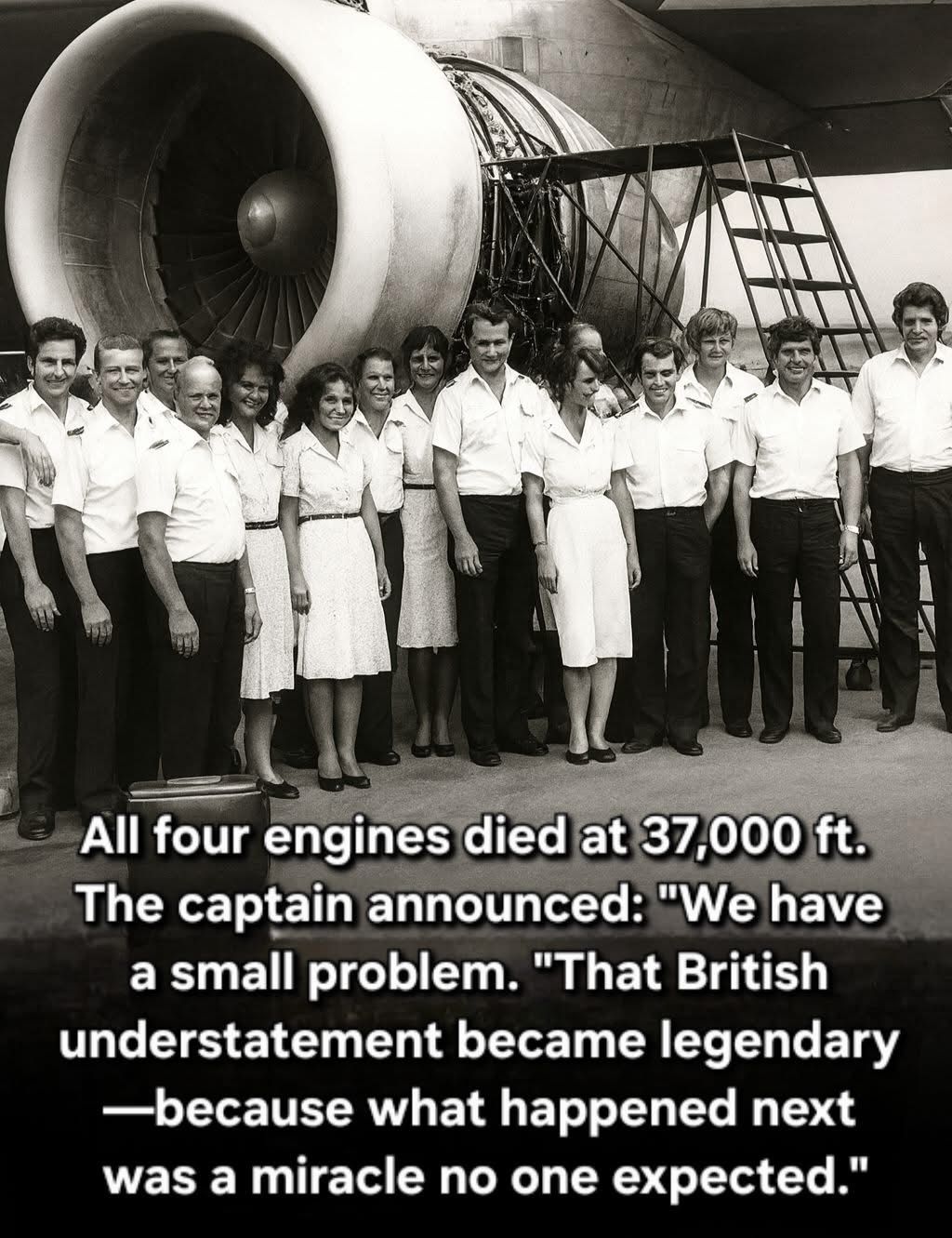
                                          IMG_5281.jpeg

                                          June 24, 1982. Over the Indian Ocean.

                                          British Airways Flight 9—a Boeing 747 carrying 263 people—was cruising peacefully at 37,000 feet when the night sky began behaving strangely.

                                          First came St. Elmo’s fire—an eerie blue glow crackling across the cockpit windows like electricity dancing on glass.

                                          Then shimmering streaks appeared along the wings, as if the aircraft were trailing sparks through darkness.

                                          Captain Eric Moody and his crew had never seen anything like it. Beautiful. Unsettling. Wrong.

                                          Then came the engine failure alarm.

                                          Engine four had failed.

                                          Before they could process that, engine two quit.

                                          Then engine one.

                                          Then engine three.

                                          In less than 90 seconds, all four engines on British Airways Flight 9 had stopped.

                                          Complete. Total. Silence.

                                          At 37,000 feet.

                                          The Impossible Problem

                                          A commercial jet losing one engine is manageable—they're designed to fly on three, or even two.

                                          Losing two engines is a serious emergency requiring immediate landing.

                                          Losing three engines is catastrophic but theoretically survivable.

                                          Losing all four? That’s not supposed to happen. Ever.

                                          Yet here was Captain Moody, flying a 300-ton glider with 263 souls aboard, no engines, no power, and no idea why.

                                          The 747 was descending—13,000 feet lost in 23 minutes—and below them was the Indian Ocean and the mountainous Indonesian coastline.

                                          They had minutes to figure out what had happened and somehow restart the engines before the aircraft became unflyable.

                                          “Ladies and Gentlemen…”

                                          In the cabin, passengers saw sparks outside their windows. Oxygen masks dropped. The cabin filled with acrid smoke that smelled like sulfur.

                                          People began writing farewell notes to loved ones.

                                          Then Captain Moody’s voice came over the intercom—calm, almost casual, with classic British understatement:

                                          “Ladies and gentlemen, this is your captain speaking. We have a small problem. All four engines have stopped. We are doing our damnedest to get them going again. I trust you are not in too much distress.”

                                          A small problem.

                                          All four engines stopped.

                                          That announcement would become one of the most famous in aviation history—not just for its legendary understatement, but because what followed was even more remarkable.

                                          Fighting for Survival

                                          In the cockpit, controlled chaos.

                                          Co-pilot Roger Greaves’ oxygen mask had broken, leaving him gasping for breath. Moody immediately descended—trading precious altitude for breathable air to save his co-pilot.

                                          Flight Engineer Barry Townley-Freeman worked frantically through restart procedures while Senior First Officer Barry Fremantle handled communications with Jakarta ATC.

                                          They tried restarting the engines.

                                          Nothing.

                                          Again.

                                          Nothing.

                                          They tried different procedures, different combinations, everything in the manual and things that weren’t.

                                          Ten attempts. Twelve. Fifteen.

                                          Each failure meant less altitude, less time, less chance of survival.

                                          The aircraft descended through 15,000 feet. Then 14,000. Then 13,000.

                                          At some point, they’d be too low to restart safely even if the engines came back.

                                          They were running out of sky.

                                          The Miracle

                                          At 13,500 feet—with Jakarta’s mountainous terrain looming in darkness—engine four suddenly coughed, sputtered, and roared back to life.

                                          Then engine three caught.

                                          Then engine one.

                                          Finally, engine two.

                                          All four engines, dead for 13 minutes and 13,000 feet of descent, had somehow restarted.

                                          The relief in the cockpit was overwhelming. They had power. They had control. They could fly again.

                                          But they weren’t safe yet.

                                          Flying Blind

                                          The volcanic ash that had choked the engines had also sandblasted the cockpit windscreen.

                                          The windows weren’t just dirty—they were opaque, abraded by millions of tiny ash particles traveling at 500 mph.

                                          Captain Moody could barely see through them. Landing would require threading the aircraft through Jakarta’s airspace, lining up with a runway, and touching down—while essentially flying blind.

                                          They used side windows for glimpses. They relied heavily on instruments. They followed radio guidance from Jakarta approach.

                                          Somehow, impossibly, Moody brought the crippled 747 down safely at Halim Perdanakusuma Airport.

                                          Not a single person died.

                                          All 263 passengers and crew walked away.

                                          The Invisible Enemy

                                          Only after landing did investigators discover what had happened:

                                          Mount Galunggung had been erupting for months. On June 24, 1982, it sent a massive ash cloud into the atmosphere—8 miles high, spreading for hundreds of miles.

                                          Flight 9 had flown directly through it.

                                          Volcanic ash is pulverized rock—tiny shards of glass suspended in air. It’s invisible to weather radar and nearly impossible to see at night.

                                          When engines ingest it, the ash melts, coats internal components, and chokes the engines.

                                          The engines restarted only because Moody descended below the ash cloud, where cooler air allowed the melted glass to solidify and break off.

                                          Skill kept them alive long enough for luck to matter.

                                          The Legacy

                                          BA Flight 9 changed aviation forever:

                                          Global volcanic ash detection systems were created

                                          Airlines receive real-time eruption alerts

                                          Flight paths are rerouted around ash

                                          Pilots are trained for ash encounters

                                          The International Airways Volcano Watch was established

                                          Captain Eric Moody

                                          Moody continued flying for British Airways until retirement. He’s remembered for his skill, composure, and the most iconic announcement in aviation history:

                                          “We have a small problem. All four engines have stopped.”

                                          The Lesson

                                          The impossible sometimes happens. Prepare anyway.
                                          Calm leadership saves lives.
                                          Never give up—restart attempt #15 was the one that worked.
                                          Learn from near-disasters so others don’t repeat them.

                                          June 24, 1982.

                                          All four engines died at 37,000 feet.
                                          The crew had 13 minutes and 13,000 feet to solve an impossible problem.

                                          They couldn’t see the ash cloud.
                                          They couldn’t see the cause.
                                          They couldn’t even see the runway.

                                          But they could think.
                                          They could act.
                                          They refused to quit.

                                          And 263 people survived because of it.

                                          British Airways Flight 9: the night the sky went dark—and human skill brought everyone home.

                                          "You cannot subsidize irresponsibility and expect people to become more responsible." — Thomas Sowell

                                          1 Reply Last reply
                                          Reply
                                          • Reply as topic
                                          Log in to reply
                                          • Oldest to Newest
                                          • Newest to Oldest
                                          • Most Votes


                                          • Login

                                          • Don't have an account? Register

                                          • Login or register to search.
                                          • First post
                                            Last post
                                          0
                                          • Categories
                                          • Recent
                                          • Tags
                                          • Popular
                                          • Users
                                          • Groups