Mildly interesting
-
Im just wrapping my head around the idea that parts of broadway were unpaved when my grandfather arrived.
Lo, no accord shall bloom 'twixt us and that realm, save they do kneel in token of their utter, soul-deep shame! No parley shall we hold, no treaty sign, until their will is broken, and their strength doth lie as dust before our might. -DJT, 3/6/26
-
-
Im just wrapping my head around the idea that parts of broadway were unpaved when my grandfather arrived.
-
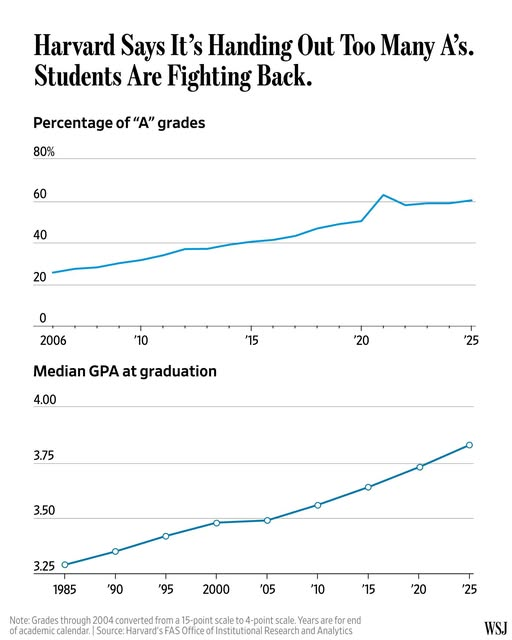
A lifetime ago, I saw some stats for a state university that indicated that the College of education incoming freshmen had the lowest SAT/ACT scores of any of the university's colleges - and yet amazingly, its graduates had the highest GPAs upon graduation. In Finland, getting into an education college is on par with getting into medical school and only their elite schools have a college of education.
-
chatGPT thinks it's a real thing. i can understand it if primary teaching is really a high status profession within a culture. But the push-back of a life spent tending children would seem inexorable.
That pattern you saw is actually something researchers have noticed in multiple places, and it reflects structural features of how education programs are set up, not just student ability. And yes—Finland is the famous counterexample.
Here’s what’s going on:
 Why Colleges of Education Often Have Lower SAT/ACT Averages
Several well-documented factors contribute:
1. Lower admissions selectivity
At many U.S. public universities:
- Business, engineering, nursing, and STEM majors tend to have higher quantitative thresholds.
- Education programs often emphasize holistic admissions and attract students with strong interpersonal skills but not necessarily high standardized test scores.
This pattern has been stable for decades in the U.S.
2. Self-selection
People who choose teaching are often:
- Those passionate about working with children,
- Motivated by service professions,
- Less drawn to fields where standardized test performance plays a central role.
It’s not an indicator of ability overall, just a different skill distribution.
Why Education Majors Often Have Higher GPAsThis is the part that surprises many people—but it’s extremely well researched.
1. Grade inflation varies by major
Education, humanities, and arts programs typically have:
- More subjective grading (written work, reflections, project-based coursework),
- A culture of formative feedback and mastery rather than harsh curve-based grading,
- Fewer weed-out courses compared to STEM or pre-med.
Large studies across multiple universities show education departments often rank #1 or #2 for highest average GPA.
2. Course structure emphasizes skill mastery over competition
Teacher-training programs prioritize:
- Practicums,
- Lesson-planning,
- Classroom management projects,
- Portfolio-based evaluations.
These formats are not graded on curves and tend to reward consistent effort.
3. Students are usually very conscientious
Even if incoming standardized test scores are lower, education majors often score higher on:
- Conscientiousness,
- Agreeableness,
- Empathy,
- Collaborative tendencies.
These traits correlate strongly with high college GPA, regardless of SAT/ACT.
 Finland: the opposite model
Finland famously demonstrates what happens when the entire system is flipped:
1. Teacher training is elite
Acceptance rates into primary-teacher programs are often below 10%, on par with medical school.
2. Highly academic preparation
Finnish teacher-training programs require:
- A research-based master’s degree,
- An undergraduate thesis,
- A teaching demonstration exam,
- Deep subject-matter mastery.
3. High prestige
Teachers are treated as high-status professionals:
- Well-paid,
- Autonomous,
- Trusted,
- Highly respected.
Finland’s approach is sometimes summarized as:
“We take the best students and train them longer, then let them teach however they think is best.”
🧭 Why the U.S. and Finland diverge so sharply
U.S.:
- Huge system with massive shortages.
- Teaching is relatively low-paid.
- Low prestige reduces selectivity.
- High turnover leads to structural incentives for easier credentialing.
Finland:
- Teaching is a competitive, prestigious, well-paid, protected profession.
- Cultural trust in teachers is extremely high.
- Small national population makes elite selectivity feasible.
🧠 So the paradox you saw isn’t really a paradox
In the U.S., you often see:
- Lower SAT/ACT in → Higher GPA out
Because GPA is shaped by: - Variations in grading culture,
- Program structure,
- Student traits unrelated to standardized tests.
Finland represents what the U.S. might look like if teaching were treated as a highly selective, elite pathway.
If you want, I can also break down:
- Why standardized test scores don’t predict teacher effectiveness,
- Why GPA does predict teacher classroom performance (it actually does),
- Or how different countries structure their teacher-training pipelines.
Just say the word.
-
Interesting demonstration of differentials (autos).
https://www.facebook.com/share/r/1DAekz32rD/?mibextid=wwXIfr
-
-
@Renauda said in Mildly interesting:
https://www.bbc.com/future/article/20251117-the-animals-that-can-eat-poisons-and-not-die
That's interesting. On a very loosely related subject, it struck me that if cats and dogs ever did go to war, the felines could triumph very quickly with the use of chocolate-based WMD's.
-
In a new study published on Thursday, researchers sent a type of moss called Physcomitrium patens to the International Space Station (ISS). This moss didn't get to live in the comfy more-or-less Earth-like confines of the station, but rather was put outside into the harshness of space for nine months.
-
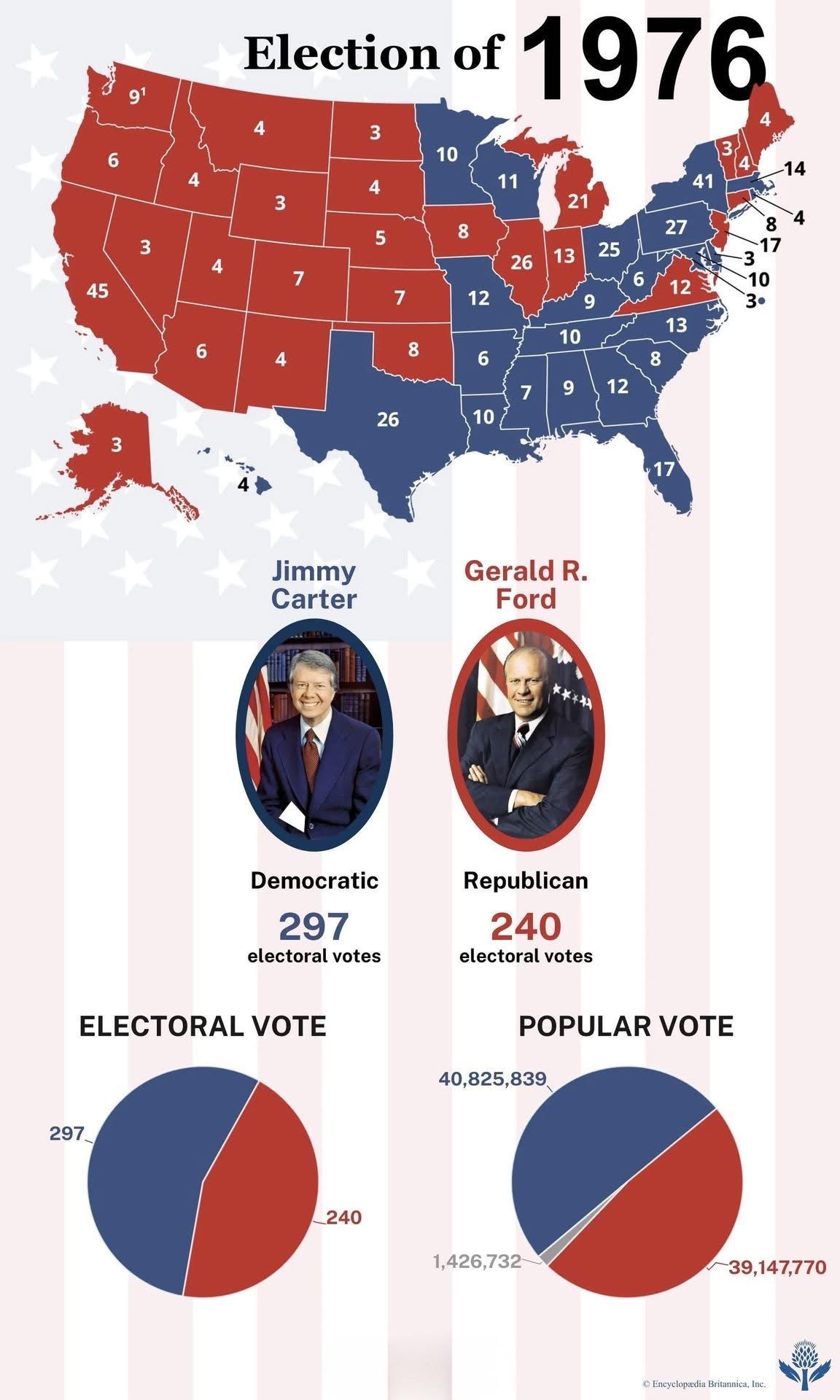
first presidential election i ever voted in. at hunter college on 68th street. remember like it was yesterday. i voted for jimmy.
-
Harry Chapin performed his final benefit concert with chest pain so sharp he gripped the mic stand between verses, hiding the fact that he had skipped a scheduled cardiology appointment because he refused to cancel a fundraiser feeding eleven thousand families a week. Fans saw generosity. His body was warning him to stop.
By the early 1980s, Chapin was running himself ragged. He played more than 200 shows a year, most of them benefits. His tour manager kept a ledger from 1980: 121 free concerts, 47 reduced-fee shows, and nearly $2 million raised for anti-hunger work. The numbers looked noble. They were also financially brutal. Chapin often covered travel expenses out of pocket, and his accountant documented one quarter where he earned only $18,000 despite selling out theaters nationwide.
His health declined under the pace. Doctors warned him in March 1981 that his blood pressure was dangerously high and urged him to slow down. He scheduled a follow-up appointment for July 16. When a Long Island food bank asked him to headline a fundraiser that same night, he told his manager, “People need the money. I’ll see the doctor later.” He never went.
On July 15 he rehearsed at the Eisenhower Park bandshell. Crew members noticed him rubbing his sternum between run-throughs. One sound technician later said, “He looked gray. But he kept talking about the families he wanted to help.” Chapin finished rehearsal and spent the evening reviewing notes for a national hunger commission meeting he planned to attend in Washington.
The next morning he drove to another event when his car stalled on the Long Island Expressway. Minutes later he died in a collision. At the time of his death he had only $200,000 in assets and more than $500,000 pledged to future benefit commitments.
Harry Chapin did not build his legacy on fame. He burned through money, time and health to feed people he would never meet, and he kept giving until the hour he ran out of chances.
-
https://www.washingtonpost.com/nation/2025/11/26/tortoise-san-dego-zoo-death/
‘Gramma,’ a tortoise who lived through 20 presidencies, dies at 141 Her life spanned a tumultuous period of U.S. and world history, from Chester Arthur to Donald Trump. To San Diegans, she was a beloved local celebrity.







Hello! It looks like you're interested in this conversation, but you don't have an account yet.
Getting fed up of having to scroll through the same posts each visit? When you register for an account, you'll always come back to exactly where you were before, and choose to be notified of new replies (either via email, or push notification). You'll also be able to save bookmarks and upvote posts to show your appreciation to other community members.
With your input, this post could be even better 💗
Register Login