Mildly interesting
-
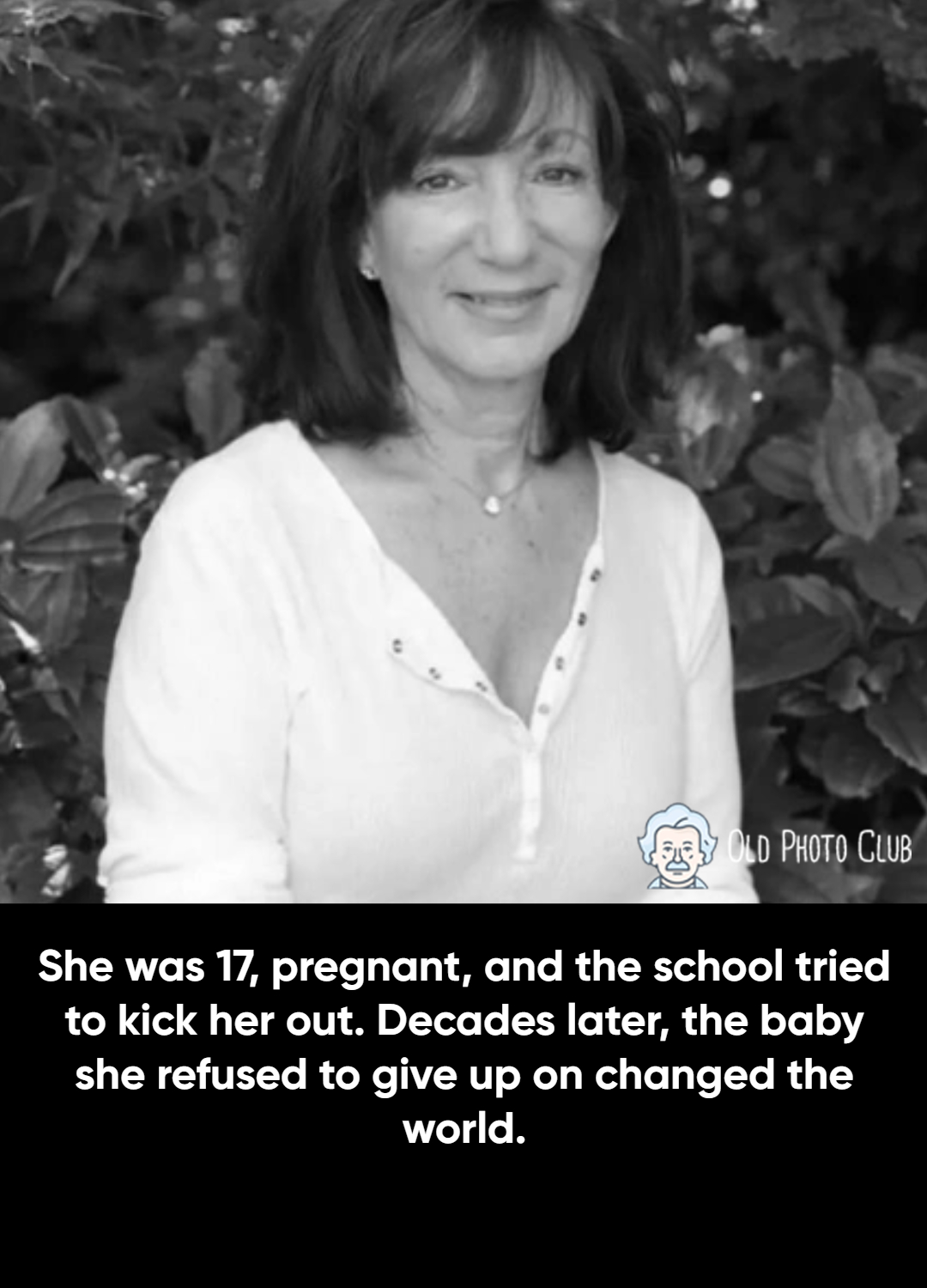
In 1964, in Albuquerque, New Mexico, a 17-year-old girl gave birth to a son. The school administrators had told her she couldn't finish high school. She pushed back anyway.
Her name was Jacklyn Gise. And the baby she was determined to raise would one day become one of the most influential people on Earth.
Being a pregnant teenager in 1960s Albuquerque wasn't just difficult — it was scandalous. When Jacklyn tried to return to school after giving birth, the administration told her no. She didn't accept that answer.
"I pushed back and I kept on pushing back," she would later recall. "Eventually the school relented."
But there were conditions. She couldn't talk to other students. She couldn't eat in the cafeteria. She had to arrive and leave within five minutes of the bells. She agreed to all of it. And she graduated.
Her marriage to her son's biological father, Ted Jorgensen, didn't survive. They were both teenagers when they married. He struggled with alcohol. They divorced before Jeff was even two years old.
Suddenly, Jacklyn was a single mother with no money. She found work as a secretary, earning $190 a month. It was barely enough to afford rent. She couldn't even pay for a telephone. Her father rigged up a walkie-talkie system so she could check in with her parents every morning at 7 a.m.
"That's how we were able to stay in an apartment," she later explained. "Because I didn't have to pay for a phone."
Determined to continue her education, Jacklyn enrolled in night school. She chose her classes based on which professors would let her bring her infant son to class. She would show up with two duffel bags — one filled with textbooks, the other with cloth diapers, bottles, and toys to keep baby Jeff occupied.
It was in one of those night classes that she met a young Cuban refugee named Miguel Bezos. He had arrived in the United States at age 15, fleeing Castro's regime with almost nothing. They fell in love.
Mike, as everyone called him, adopted Jeff and gave him his name. Together, Jacklyn and Mike built a home where hard work, education, and big dreams were the foundation of everything.
Jacklyn never stopped learning. Even after putting her college dreams on hold to raise her family and support Mike's career, she went back. In her late thirties, she enrolled again. She was relentless. At age 40, Jacklyn Bezos finally earned her college degree.
"When I graduated from the College of Saint Elizabeth at the age of 40," she said, "I had never been more proud of myself."
Then, in 1995, her oldest son came to her and Mike with a proposal that sounded risky. Jeff wanted to quit his stable Wall Street job to start a company selling books on the internet. Most people had barely heard of the internet. Almost no one was shopping on it.
He told his parents there was a 70% chance the company would fail. They invested anyway.
Jacklyn and Mike put approximately $245,000 into their son's startup. It was an enormous leap of faith. If Jeff was right about the odds, they would lose everything.
The company was called Amazon.
By 2018, that investment had grown to approximately $30 billion.
But the money was never the point for Jacklyn.
Jeff Bezos has spoken publicly about his mother countless times. He called her story "incredible." He credits her not just for the financial investment, but for the foundation she built — the values she instilled, the example she set, the sacrifices she made when he was too young to understand them.
Jacklyn Bezos never sought the spotlight. While her son became one of the most recognizable people on the planet, she worked quietly behind the scenes. She co-founded the Bezos Family Foundation, donating hundreds of millions to education and health causes. She championed opportunities for young people, especially those who faced obstacles like she once did.
She passed away in August 2025 at the age of 78, after battling Lewy body dementia. Her son announced her death with a simple tribute: "She pounced on the job of loving me with ferocity."
Jacklyn Bezos's life proves something important about parenting.
The most valuable gift you can give your children isn't money. It's showing them what's possible by refusing to accept what others say is impossible.
She was a teenage mother who society might have written off. Instead, she raised a son who changed the world — and she did it by changing hers first. -
It is.
By odd coincidence, this is the opening sentence of his column today.
The Democratic Party’s future — if it wants one; the evidence is mixed — should be based on candidates who understand that U.S. politics, when healthy, takes place between the 40-yard lines, contesting the center of the field.
Lo, no accord shall bloom 'twixt us and that realm, save they do kneel in token of their utter, soul-deep shame! No parley shall we hold, no treaty sign, until their will is broken, and their strength doth lie as dust before our might. -DJT, 3/6/26
-
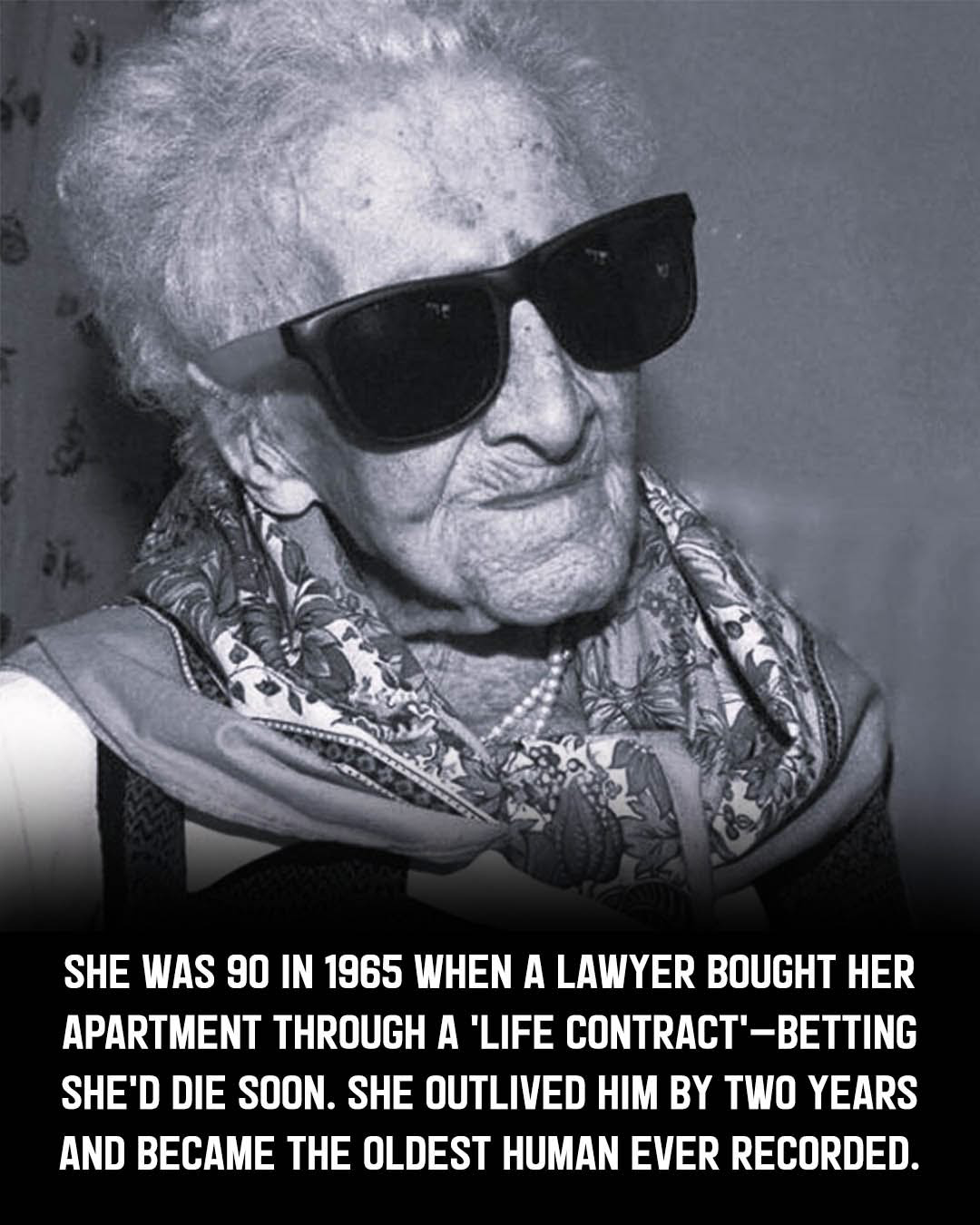
She was 90 in 1965 when a lawyer bought her apartment through a "life contract"—betting she'd die soon. She outlived him by two years and became the oldest human ever recorded.
Jeanne Calment sat in her spacious apartment above the family drapery store in Arles, France, in 1965, considering an offer from her lawyer.
She was 90 years old, a widow with no living heirs. Her daughter Yvonne had died at 36. Her grandson Frédéric had died at 37. She lived alone in this beautiful second-floor apartment in the center of town—a place full of memories but far too large for one elderly woman.
André-François Raffray, a 47-year-old notary, made her a proposal.
He would buy her apartment through a French arrangement called a "viager"—a life estate contract. Jeanne could continue living in the apartment for the rest of her life, and Raffray would pay her 2,500 francs every month (about $500 at the time, or roughly €380).
When she died, the apartment would become his.
For Jeanne, it was security—guaranteed income for however long she had left, without losing her home.
For Raffray, it seemed like the deal of a lifetime.
Jeanne was already 90 years old. She had exceeded the average French life expectancy by more than two decades. She smoked cigarettes—had been smoking since she was 21. She ate two pounds of chocolate every week. She drank cheap red wine daily.
How much longer could she possibly live?
Raffray signed the contract, confident he'd be moving into that beautiful apartment within a few years, having paid a fraction of its market value.
The payments began: 2,500 francs, every single month.
And Jeanne Calment kept living.
Months became years. Years became a decade.
In 1970, Jeanne celebrated her 95th birthday. Raffray was still writing checks.
In 1975, she turned 100. Raffray had been paying for ten years.
She wasn't just alive—she was thriving. At 85, she had taken up fencing. She rode her bicycle until she was 100. She walked daily through the streets of Arles, chatting with shopkeepers who had known her for decades.
Journalists began interviewing her as a curiosity—a woman who had lived in three different centuries, who remembered meeting Vincent van Gogh when she was a teenage girl working in her father's art supply shop in 1888.
"He was dirty, badly dressed, and disagreeable," she recalled with perfect clarity, nearly a century later.
And still, every month, Raffray paid.
By 1985, when Jeanne was 110 years old, she finally moved into a nursing home. Raffray must have felt relief—surely now, finally, the end was near.
The checks kept going.
In 1990, Jeanne turned 115. Raffray had been paying for 25 years. He was now 72 years old, having dedicated more than half his adult life to monthly payments for an apartment he'd never lived in.
The total he'd paid had long since exceeded the apartment's market value.
And Jeanne Calment showed no signs of slowing down.
She gave interviews from her nursing home, sharp as ever, recounting childhood memories with astonishing detail. She released a rap CD at age 120—yes, you read that correctly—speaking over musical tracks in what became a bizarre cultural phenomenon.
On December 25, 1995—Christmas Day—André-François Raffray died. He was 77 years old.
He had paid Jeanne Calment for thirty years.
He had paid her more than 900,000 francs—more than double the apartment's actual value.
He never spent a single night in that apartment.
When informed of Raffray's death, Jeanne—now 120 years old—reportedly dined on foie gras, duck, cheese, and chocolate cake at her nursing home.
Asked about the viager arrangement that had made her famous, she offered a dry observation: "In life, one sometimes makes bad deals."
But the story wasn't over.
According to the terms of the viager contract, Raffray's family was legally obligated to continue the monthly payments until Jeanne's death.
His widow, Huguette Raffray, kept writing the checks.
2,500 francs. Every month. To a woman who refused to die.
Jeanne Calment lived another year and a half.
On August 4, 1997, at the age of 122 years and 164 days, she finally passed away.
She remains, to this day, the oldest verified human being in recorded history.
No one before or since has lived conclusively longer than Jeanne Calment. She outlived everyone born in the 1800s. She outlived three French Republics. She outlived the lawyer who bet against her longevity by two full years.
When she died, Huguette Raffray finally inherited the apartment—after 32 years of monthly payments totaling more than twice its value.
"She was a personality," Huguette said graciously to reporters. "My husband had good relations with Mrs. Calment."
The story of Jeanne Calment and André-François Raffray became legendary in France—not just for its dark financial irony, but for what it revealed about the hubris of betting against human endurance.
Raffray had looked at a 90-year-old woman and seen an inevitability. An actuarial certainty. A safe bet.
He forgot that statistics describe populations, not individuals.
And Jeanne Calment was no ordinary individual.
The viager system still exists in France today. It's meant to provide security for elderly people and investment opportunities for buyers willing to wait.
But every notary in France knows the story of Jeanne Calment.
And they all remember: sometimes the safest bet turns out to be the worst deal of a lifetime.
Jeanne lived through the Eiffel Tower's construction, two World Wars, the invention of the automobile, radio, television, computers, and the internet. She was born when Ulysses S. Grant was President of the United States.
She lived long enough to see the world transform completely—multiple times.
And through it all, every single month for 32 years, a check arrived.
2,500 francs.
For an apartment she never left.
For a deal that became a legend.
For a life that refused to end on anyone's timeline but her own. -
-
-

The hole in the roof isn't a mistake. It is the only reason the building is still standing.
When people walk into the Pantheon, they look up at the rain falling through the 9-meter opening and ask: "Did they run out of money? Why didn't they finish the roof?"
The answer is Roman genius.- Why is the hole there? (The Engineering) If the Romans had closed the dome with heavy concrete, the weight at the top would have been too crushing. The dome would have collapsed under its own stress 2,000 years ago. The Oculus (the eye) acts as a "Reverse Keystone." It actually relieves the structural tension. It lightens the load at the weakest point of the dome.
- The Secret Recipe (Why it doesn't collapse) The Romans didn't just pour one type of concrete. They were the masters of chemistry.
At the bottom (the base): They used concrete mixed with heavy Travertine rock for strength.
In the middle: They switched to lighter Tuff rock.
At the very top (near the hole): They mixed the concrete with Pumice (volcanic rock so light it floats on water).
The top of the dome is incredibly light. If they had used the heavy bottom concrete at the top, the Pantheon would be a pile of rubble today. - Why doesn't it flood? It has rained inside the Pantheon for nearly 2,000 years. So why isn't the floor a swimming pool? If you look closely at the marble floor, it isn't flat. It is slightly convex (curved in the center). This guides the rainwater toward 22 tiny, hidden drainage holes cut directly into the marble. The water flows into an ancient Roman sewer system underneath the building—a system that still works today.
- The "Sun" Dial The hole wasn't just for weight; it was for the gods. The Pantheon was a temple to "All Gods." The Oculus allowed the heavens to enter the temple. On April 21st (the birthday of Rome), the sun strikes the entrance grill perfectly at noon. It wasn't just a building; it was a functioning astronomical clock.
So no, they didn't forget the glass. They built a machine made of stone that has survived Barbarians, Popes, and gravity for 19 centuries.
@Mik said in Mildly interesting:
The hole in the roof isn't a mistake. It is the only reason the building is still standing.
When people walk into the Pantheon, they look up at the rain falling through the 9-meter opening and ask: "Did they run out of money? Why didn't they finish the roof?"
The answer is Roman genius.Very cool building. And mildly interesting is also that after 2000 years, it is still the largest unsupported concrete dome in the world.
-
It is.
By odd coincidence, this is the opening sentence of his column today.
The Democratic Party’s future — if it wants one; the evidence is mixed — should be based on candidates who understand that U.S. politics, when healthy, takes place between the 40-yard lines, contesting the center of the field.
@jon-nyc said in Mildly interesting:
It is.
By odd coincidence, this is the opening sentence of his column today.
The Democratic Party’s future — if it wants one; the evidence is mixed — should be based on candidates who understand that U.S. politics, when healthy, takes place between the 40-yard lines, contesting the center of the field.
Exactly. The middle decides things, but too oftentimes, the party's seem to lean towards the outsides.
-
https://www.sciencefocus.com/planet-earth/worlds-largest-doomsday-vault-seeds
Long article on "seed banks," very high security, very low temperature (even cryogenic) "vaults" storing large amount and large variety of seeds. Seeds of important food plants, rare/near-extinct plants, etc. Things to "restart" the food supply or replant the land after "doomsday."
-
For the adventurous gourmet cooks here or those interested in a wholly different trip:
Every year, doctors at a hospital in the Yunnan Province of China brace themselves for an influx of people with an unusual complaint. The patients come with a strikingly odd symptom: visions of pint-sized, elf-like figures – marching under doors, crawling up walls and clinging to furniture.
The hospital treats hundreds of these cases every year. All share a common culprit: Lanmaoa asiatica, a type of mushroom that forms symbiotic relationships with pine trees in nearby forests and is a locally popular food, known for its savory, umami-packed flavor. In Yunnan, L. asiatica is sold in markets, it appears on restaurant menus and is served at home during peak mushroom season between June and August.
One must be careful to cook it thoroughly, though, otherwise the hallucinations will set in.
https://www.bbc.com/future/article/20260121-the-mysterious-mushroom-that-makes-you-see-tiny-people
-
For the adventurous gourmet cooks here or those interested in a wholly different trip:
Every year, doctors at a hospital in the Yunnan Province of China brace themselves for an influx of people with an unusual complaint. The patients come with a strikingly odd symptom: visions of pint-sized, elf-like figures – marching under doors, crawling up walls and clinging to furniture.
The hospital treats hundreds of these cases every year. All share a common culprit: Lanmaoa asiatica, a type of mushroom that forms symbiotic relationships with pine trees in nearby forests and is a locally popular food, known for its savory, umami-packed flavor. In Yunnan, L. asiatica is sold in markets, it appears on restaurant menus and is served at home during peak mushroom season between June and August.
One must be careful to cook it thoroughly, though, otherwise the hallucinations will set in.
https://www.bbc.com/future/article/20260121-the-mysterious-mushroom-that-makes-you-see-tiny-people







Hello! It looks like you're interested in this conversation, but you don't have an account yet.
Getting fed up of having to scroll through the same posts each visit? When you register for an account, you'll always come back to exactly where you were before, and choose to be notified of new replies (either via email, or push notification). You'll also be able to save bookmarks and upvote posts to show your appreciation to other community members.
With your input, this post could be even better 💗
Register Login