Who’s watching the SOTU speech tonight?
-
"Inflation is plummeting."
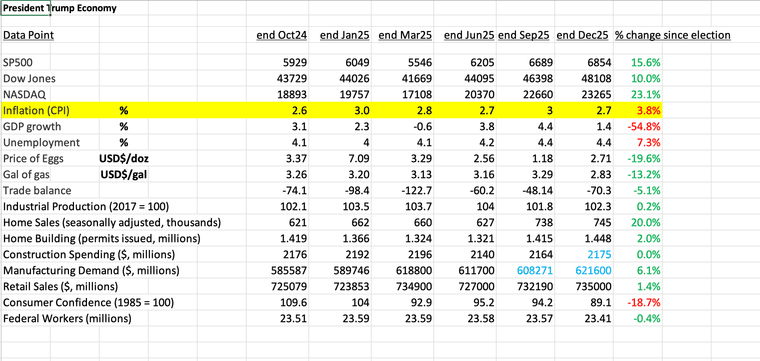
D'oh!!!
-
Yet another lie. Whoever invented those numbers on that spreadsheet should be ashamed of themselves.
@Horace said in Who’s watching the SOTU speech tonight?:
Yet another lie. Whoever invented those numbers on that spreadsheet should be ashamed of themselves.
We all know he's reduced inflation by 4000%. I went into buy groceries today and came away with a check for $500.
-
Democrats’ Response to the President’s Big Speech: What’s True, What’s Spin
By Francis Gauthier
Before you read a single talking point, understand this:
What follows isn’t cable-news spin. It isn’t a social media thread. It isn’t partisan copy-paste.
• #FactCheck
• #FollowTheData
• #Accountability
• #TruthMatters
It comes out of a structured, claim-by-claim deep-dive research project that pulled transcripts, government releases, economic data tables, enforcement reporting, and fact-check compilations into one place and tested them against primary sources.
Every claim from the Democrat response to the State of the Union was broken down into:
• The exact quote
• The metric being claimed
• The time window implied
• The data source required to verify it
• The statistical or legal assumptions underneath it
Then those claims were cross-checked against:
• Bureau of Labor Statistics CPI releases
• Bureau of Economic Analysis GDP data
• Treasury tariff revenue
• CBO incidence assumptions
• Health policy projections
• Documented clinic closures
• Reporting and litigation records on immigration enforcement
No vibes. No slogans. No outrage theater.
Just: what was said, what can be verified, what depends on modeling, and what crosses the line into rhetorical stretch.
The result isn’t a partisan rant. It’s a ledger. Some claims hold. Some are conditional. Some are overstated. A few are legally sloppy.
That’s how adults argue policy.
Proverbs 18:17 says, “The first to state his case seems right, until the other comes and examines him.” The principle: examine before you conclude. The application: always test the claim against the record.
A Conservative Rebuttal to the Democrat/Left Response to the 2026 State of the Union
The Democratic rebuttal leaned hard on emotion. The underlying PDF analysis shows something different: when you strip out the rhetoric and run the numbers, most of their claims are either conditional, overstated, or legally imprecise.
Let’s walk through it.
⸻- The “$1,700 Tariff Tax” Claim
Democrats say families “paid $1,700 in tariff costs.”
The document makes clear that this is a modeled estimate, not a receipt in anyone’s mailbox. It depends on:
• Assumed consumer pass-through rates
• CBO incidence modeling
• Treasury revenue totals
• Household count assumptions
The report itself calls it “Mostly true” — but only as an estimate built on assumptions.
That matters.
Tariffs are strategic economic tools. You can debate whether they’re wise. But presenting a model projection as if it were a proven household bill? That’s political packaging.
If you’re going to make the argument, say it honestly: “Based on economic modeling, we estimate…” Not “You paid this.” Big difference.
⸻ - Cost of Living: Selective Framing
Yes — shelter, food, and electricity rose year-over-year.
But the full inflation picture shows:
• Overall CPI: 2.4%
• Gasoline: down 7.5% year-over-year
• GDP still growing (more on that below)
The document labels this claim “Mostly true,” but notes that the rhetoric implies a broader economic spiral than the full data supports.
Translation: they cherry-picked the painful categories and ignored the moderating ones.
That’s politics, not analysis.
⸻ - Rural Clinic Closures and OBBB
Here’s where Democrats had their strongest footing.
There are documented rural clinic closures in Virginia explicitly tied by providers to the OBBB law. The report rates that portion “True.”
But the broader language — “across the country” — lacks documented scale in the report.
In other words:
• Yes, closures happened.
• No, there’s no documented nationwide collapse in this report.
Precision matters.
⸻ - “Millions Are Losing Health Care”
This is where the wheels wobble.
The report clarifies that the “millions” figure largely relies on projections — some extending years into the future. Early CMS signals suggest drop-offs, but projected uninsured totals depend on modeling and time horizon.
The verdict: “Partly true.”
That’s political shorthand for: “Technically defensible if you stretch the timeframe.”
Saying “millions are losing coverage” implies an immediate, real-time crisis. What the data shows is projected impact over years.
Those are not the same thing.
⸻ - ICE “Entering Homes Without Warrants”
This is the cleanest example of rhetorical inflation.
The dispute centers on administrative warrants versus judicial warrants.
Administrative warrants exist.
So saying “without warrants” is imprecise.
The report calls this claim “Misleading.”
If the argument is about constitutional standards and judicial authorization, say that. Don’t oversimplify into something factually incorrect. That weakens a serious civil-liberties debate.
⸻ - “GDP Nearly Flatlined”
This one doesn’t survive contact with the data.
BEA shows Q4 2025 real GDP grew at 1.4% annualized.
Slower than Q3? Yes.
Flatlined? No.
The report labels that “Misleading.”
Words matter. Especially when talking about the economy.
⸻
The Pattern
The PDF’s own conclusion is telling:
The strongest Democratic arguments were tied to auditable numbers.
The weakest were the ones that blurred legal definitions or exaggerated statistical terms.
That’s the pattern.
• When they cited documented clinic closures — solid.
• When they cited modeled tariff estimates but presented them as certainty — overstated.
• When they said GDP flatlined — rhetorical.
• When they said “without warrants” — sloppy.
⸻
The Conservative Position
A strong conservative rebuttal doesn’t deny economic pressures. It does three things: - Demands precision in economic claims.
- Distinguishes projections from present reality.
- Insists on legal accuracy in enforcement debates.
You don’t win by ignoring numbers.
You win by reading the footnotes.
Tariffs can be debated.
Health policy can be debated.
Immigration enforcement can be debated.
But exaggeration is not analysis.
And voters know the difference.
⸻
Clean Analytical Summary
Based on the PDF review:
• Tariff household cost claim: Modeled estimate, plausible but not measurable fact.
• Inflation claim: Accurate for selected categories, incomplete for overall inflation picture.
• Rural clinic closures: Documented in specific cases; national scale less established.
• “Millions losing coverage”: Projection-dependent; timeframe critical.
• ICE “without warrants”: Legally imprecise; dispute is judicial vs administrative warrants.
• GDP “flatlined”: Incorrect characterization of 1.4% growth.
In short: The rebuttal leaned more on framing than falsification. Most claims sit in the “mostly true but rhetorically stretched” category rather than outright falsehood.
That’s important. Because political credibility is lost in the stretch.
⸻
Truth isn’t advanced by exaggeration. “Better is a poor and wise child than an old and foolish king, who will no more be admonished” (Ecclesiastes 4:13). The principle: humility before facts. The application: check the numbers before repeating the line.
- The “$1,700 Tariff Tax” Claim
-
Democrats’ Response to the President’s Big Speech: What’s True, What’s Spin
By Francis Gauthier
Before you read a single talking point, understand this:
What follows isn’t cable-news spin. It isn’t a social media thread. It isn’t partisan copy-paste.
• #FactCheck
• #FollowTheData
• #Accountability
• #TruthMatters
It comes out of a structured, claim-by-claim deep-dive research project that pulled transcripts, government releases, economic data tables, enforcement reporting, and fact-check compilations into one place and tested them against primary sources.
Every claim from the Democrat response to the State of the Union was broken down into:
• The exact quote
• The metric being claimed
• The time window implied
• The data source required to verify it
• The statistical or legal assumptions underneath it
Then those claims were cross-checked against:
• Bureau of Labor Statistics CPI releases
• Bureau of Economic Analysis GDP data
• Treasury tariff revenue
• CBO incidence assumptions
• Health policy projections
• Documented clinic closures
• Reporting and litigation records on immigration enforcement
No vibes. No slogans. No outrage theater.
Just: what was said, what can be verified, what depends on modeling, and what crosses the line into rhetorical stretch.
The result isn’t a partisan rant. It’s a ledger. Some claims hold. Some are conditional. Some are overstated. A few are legally sloppy.
That’s how adults argue policy.
Proverbs 18:17 says, “The first to state his case seems right, until the other comes and examines him.” The principle: examine before you conclude. The application: always test the claim against the record.
A Conservative Rebuttal to the Democrat/Left Response to the 2026 State of the Union
The Democratic rebuttal leaned hard on emotion. The underlying PDF analysis shows something different: when you strip out the rhetoric and run the numbers, most of their claims are either conditional, overstated, or legally imprecise.
Let’s walk through it.
⸻- The “$1,700 Tariff Tax” Claim
Democrats say families “paid $1,700 in tariff costs.”
The document makes clear that this is a modeled estimate, not a receipt in anyone’s mailbox. It depends on:
• Assumed consumer pass-through rates
• CBO incidence modeling
• Treasury revenue totals
• Household count assumptions
The report itself calls it “Mostly true” — but only as an estimate built on assumptions.
That matters.
Tariffs are strategic economic tools. You can debate whether they’re wise. But presenting a model projection as if it were a proven household bill? That’s political packaging.
If you’re going to make the argument, say it honestly: “Based on economic modeling, we estimate…” Not “You paid this.” Big difference.
⸻ - Cost of Living: Selective Framing
Yes — shelter, food, and electricity rose year-over-year.
But the full inflation picture shows:
• Overall CPI: 2.4%
• Gasoline: down 7.5% year-over-year
• GDP still growing (more on that below)
The document labels this claim “Mostly true,” but notes that the rhetoric implies a broader economic spiral than the full data supports.
Translation: they cherry-picked the painful categories and ignored the moderating ones.
That’s politics, not analysis.
⸻ - Rural Clinic Closures and OBBB
Here’s where Democrats had their strongest footing.
There are documented rural clinic closures in Virginia explicitly tied by providers to the OBBB law. The report rates that portion “True.”
But the broader language — “across the country” — lacks documented scale in the report.
In other words:
• Yes, closures happened.
• No, there’s no documented nationwide collapse in this report.
Precision matters.
⸻ - “Millions Are Losing Health Care”
This is where the wheels wobble.
The report clarifies that the “millions” figure largely relies on projections — some extending years into the future. Early CMS signals suggest drop-offs, but projected uninsured totals depend on modeling and time horizon.
The verdict: “Partly true.”
That’s political shorthand for: “Technically defensible if you stretch the timeframe.”
Saying “millions are losing coverage” implies an immediate, real-time crisis. What the data shows is projected impact over years.
Those are not the same thing.
⸻ - ICE “Entering Homes Without Warrants”
This is the cleanest example of rhetorical inflation.
The dispute centers on administrative warrants versus judicial warrants.
Administrative warrants exist.
So saying “without warrants” is imprecise.
The report calls this claim “Misleading.”
If the argument is about constitutional standards and judicial authorization, say that. Don’t oversimplify into something factually incorrect. That weakens a serious civil-liberties debate.
⸻ - “GDP Nearly Flatlined”
This one doesn’t survive contact with the data.
BEA shows Q4 2025 real GDP grew at 1.4% annualized.
Slower than Q3? Yes.
Flatlined? No.
The report labels that “Misleading.”
Words matter. Especially when talking about the economy.
⸻
The Pattern
The PDF’s own conclusion is telling:
The strongest Democratic arguments were tied to auditable numbers.
The weakest were the ones that blurred legal definitions or exaggerated statistical terms.
That’s the pattern.
• When they cited documented clinic closures — solid.
• When they cited modeled tariff estimates but presented them as certainty — overstated.
• When they said GDP flatlined — rhetorical.
• When they said “without warrants” — sloppy.
⸻
The Conservative Position
A strong conservative rebuttal doesn’t deny economic pressures. It does three things: - Demands precision in economic claims.
- Distinguishes projections from present reality.
- Insists on legal accuracy in enforcement debates.
You don’t win by ignoring numbers.
You win by reading the footnotes.
Tariffs can be debated.
Health policy can be debated.
Immigration enforcement can be debated.
But exaggeration is not analysis.
And voters know the difference.
⸻
Clean Analytical Summary
Based on the PDF review:
• Tariff household cost claim: Modeled estimate, plausible but not measurable fact.
• Inflation claim: Accurate for selected categories, incomplete for overall inflation picture.
• Rural clinic closures: Documented in specific cases; national scale less established.
• “Millions losing coverage”: Projection-dependent; timeframe critical.
• ICE “without warrants”: Legally imprecise; dispute is judicial vs administrative warrants.
• GDP “flatlined”: Incorrect characterization of 1.4% growth.
In short: The rebuttal leaned more on framing than falsification. Most claims sit in the “mostly true but rhetorically stretched” category rather than outright falsehood.
That’s important. Because political credibility is lost in the stretch.
⸻
Truth isn’t advanced by exaggeration. “Better is a poor and wise child than an old and foolish king, who will no more be admonished” (Ecclesiastes 4:13). The principle: humility before facts. The application: check the numbers before repeating the line.
@Mik said in Who’s watching the SOTU speech tonight?:
Democrats’ Response to the President’s Big Speech: What’s True, What’s Spin
By Francis Gauthier-
Let's see Francis Gauthier provide a comparable fact-checking write up against claims made in Trump's SOTU speech.
-
Or let's see @mik quotes a comparable fact-checking write up against claims made in Trump's SOTU speech.
- The “$1,700 Tariff Tax” Claim
-
@Mik said in Who’s watching the SOTU speech tonight?:
Democrats’ Response to the President’s Big Speech: What’s True, What’s Spin
By Francis Gauthier-
Let's see Francis Gauthier provide a comparable fact-checking write up against claims made in Trump's SOTU speech.
-
Or let's see @mik quotes a comparable fact-checking write up against claims made in Trump's SOTU speech.
@Axtremus said in Who’s watching the SOTU speech tonight?:
@Mik said in Who’s watching the SOTU speech tonight?:
Democrats’ Response to the President’s Big Speech: What’s True, What’s Spin
By Francis Gauthier-
Let's see Francis Gauthier provide a comparable fact-checking write up against claims made in Trump's SOTU speech.
-
Or let's see @mik quotes a comparable fact-checking write up against claims made in Trump's SOTU speech.
Yes, every time anybody posts anything supportive of the right on TNCR, we should make sure it's counterbalanced by something that attacks the right.
If only we had any posters here brave enough to attack the right. I have to admit, under the fascistic rule of Donald Trump, I can understand why nobody is willing to. I wouldn't want to be thrown into the gulags either.
We must face facts. The human race simply does not contain a single person presently with the bravery required to say anything negative about Trump.
Maybe, Ax, you can be that guy? Just once? Maybe, if someone says something negative about him, and doesn't immediately get imprisoned, it will break the seal. You could win the congressional medal of freedom, or maybe even the Nobel Peace Prize.
It just takes one person.
Education is extremely important.
-
-
Horace is trying that irony thing again - I think he might be overdoing it a bit, but I guess he does live in Texas. Everything is so much more down there.
-
Not always. Here's from a Texas Democrat.
"You cannot subsidize irresponsibility and expect people to become more responsible." — Thomas Sowell
-
I doubt it changed many votes, but the outlier insufferables like Omar and Tahlib on the D side must be terrible for national Dem politics. My guess is that if the Dems had it to do over again, they'd just not show up to the speech en masse.
Education is extremely important.
-
Not always. Here's from a Texas Democrat.
-
@Axtremus said in Who’s watching the SOTU speech tonight?:
@Mik said in Who’s watching the SOTU speech tonight?:
Democrats’ Response to the President’s Big Speech: What’s True, What’s Spin
By Francis Gauthier-
Let's see Francis Gauthier provide a comparable fact-checking write up against claims made in Trump's SOTU speech.
-
Or let's see @mik quotes a comparable fact-checking write up against claims made in Trump's SOTU speech.
Yes, every time anybody posts anything supportive of the right on TNCR, we should make sure it's counterbalanced by something that attacks the right.
If only we had any posters here brave enough to attack the right. I have to admit, under the fascistic rule of Donald Trump, I can understand why nobody is willing to. I wouldn't want to be thrown into the gulags either.
We must face facts. The human race simply does not contain a single person presently with the bravery required to say anything negative about Trump.
Maybe, Ax, you can be that guy? Just once? Maybe, if someone says something negative about him, and doesn't immediately get imprisoned, it will break the seal. You could win the congressional medal of freedom, or maybe even the Nobel Peace Prize.
It just takes one person.
@Horace said in Who’s watching the SOTU speech tonight?:
medal of freedom, or maybe even the Nobel Peace Prize.It just takes one person.
And an alternative.
-
-
I doubt it changed many votes, but the outlier insufferables like Omar and Tahlib on the D side must be terrible for national Dem politics. My guess is that if the Dems had it to do over again, they'd just not show up to the speech en masse.
@Horace said in Who’s watching the SOTU speech tonight?:
I doubt it changed many votes, but the outlier insufferables like Omar and Tahlib on the D side must be terrible for national Dem politics. My guess is that if the Dems had it to do over again, they'd just not show up to the speech en masse.
Yeah they’re almost cartoonishly bad.
-
The republics are running into the same problem the democrats did leading up to the 2024 election, but they have it for the 2026 election.
The general perception of the economy is that it is in bad shape and heading in the wrong direction. That is not completely agreed by the data.
I think it was @jolly who said that is was the perception that mattered, and he was referring to the status before the 2024 election. Wonder if he still thinks that?
-
-
-
Not five of the nine Supreme Court justices: “Justices Samuel Alito., Clarence Thomas, Neil Gorsuch, Sonia Sotomayor and Ketanji Brown Jackson were not present.”
https://www.foxnews.com/politics/supreme-court-justices-skip-trump-state-of-union-tariff-ruling
-
Not five of the nine Supreme Court justices: “Justices Samuel Alito., Clarence Thomas, Neil Gorsuch, Sonia Sotomayor and Ketanji Brown Jackson were not present.”
https://www.foxnews.com/politics/supreme-court-justices-skip-trump-state-of-union-tariff-ruling
@Axtremus said in Who’s watching the SOTU speech tonight?:
Not five of the nine Supreme Court justices: “Justices Samuel Alito., Clarence Thomas, Neil Gorsuch, Sonia Sotomayor and Ketanji Brown Jackson were not present.”
https://www.foxnews.com/politics/supreme-court-justices-skip-trump-state-of-union-tariff-ruling
No indication in the story that any of that is out of the ordinary.










Hello! It looks like you're interested in this conversation, but you don't have an account yet.
Getting fed up of having to scroll through the same posts each visit? When you register for an account, you'll always come back to exactly where you were before, and choose to be notified of new replies (either via email, or push notification). You'll also be able to save bookmarks and upvote posts to show your appreciation to other community members.
With your input, this post could be even better 💗
Register Login