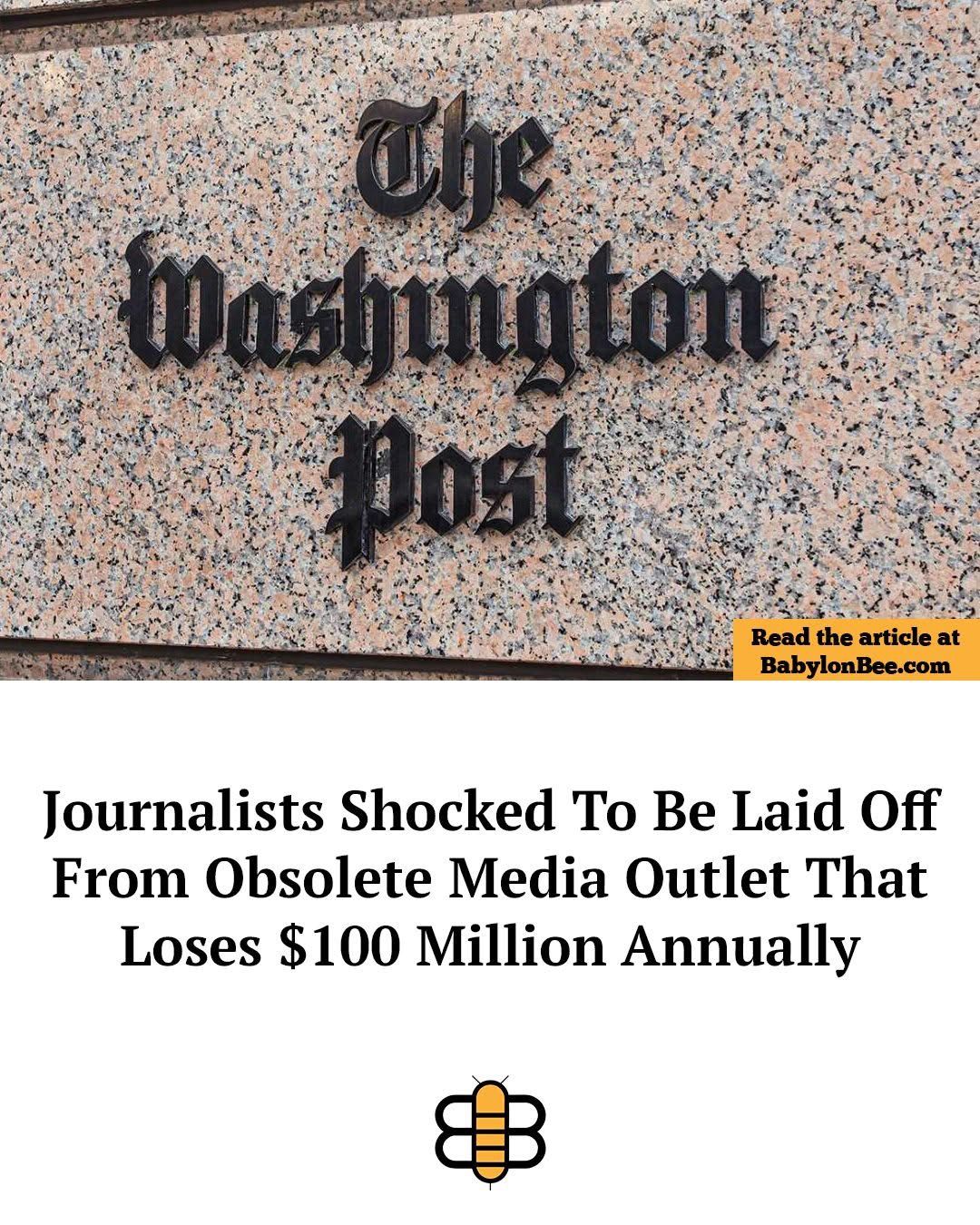
No thread about the bloodbath at WaPo?
-
Have to imagine Bezos regrets the purchase. This decision implies the purchase was an economic investment rather than a cultural investment or branding investment, but I guess the real motivation here is that he regrets the branding investment and wants out of the brand.
-
It seems like a lot of social media, the traditional newspapers have to get somewhat "outrageous" to get and keep an audience. A paper that just reports the news and provides good in depth coverage has trouble staying alive in today's world.
And it is not just the US, it is everywhere unfortunately.
-
It seems like a lot of social media, the traditional newspapers have to get somewhat "outrageous" to get and keep an audience. A paper that just reports the news and provides good in depth coverage has trouble staying alive in today's world.
And it is not just the US, it is everywhere unfortunately.
@taiwan_girl said in No thread about the bloodbath at WaPo?:
It seems like a lot of social media, the traditional newspapers have to get somewhat "outrageous" to get and keep an audience. A paper that just reports the news and provides good in depth coverage has trouble staying alive in today's world.
And it is not just the US, it is everywhere unfortunately.
Neither of your descriptors applies to WaPo…
-
Hopefully he can invest the money he's saving into making more quality movies.
Melania II, the sequel perhaps? Or how about doing Eric and Don's Bogus Journey?
-
@Mik said in No thread about the bloodbath at WaPo?:
He’s going to use AI to crawl over the web for stories.
Here's your chance, fellow Coffee-Roomers! Post profusely, your TNCR posts just might get picked up by Bezos' crawler bots and recycled into WaPo articles!
-
I've seen this coming for 20+ years, partly because I had friends who worked at the formerly great newspaper, the Cincinnati Enquirer. Now Gannett backup toilet paper. These people were either stupid or in denial or both.
-
I've seen this coming for 20+ years, partly because I had friends who worked at the formerly great newspaper, the Cincinnati Enquirer. Now Gannett backup toilet paper. These people were either stupid or in denial or both.
@Mik said in No thread about the bloodbath at WaPo?:
I've seen this coming for 20+ years, partly because I had friends who worked at the formerly great newspaper, the Cincinnati Enquirer. Now Gannett backup toilet paper. These people were either stupid or in denial or both.
Back in 2003-2004, it was blatantly obvious. Karla used to work for the American Society of Newsroom Editors, working with every single major publication. They knew it back then…
-
Watergate and journalism chasing that dragon, destroying itself in the process.
Short answer: yes, Bob Woodward and Carl Bernstein changed journalism’s self-image — but they didn’t invent journalistic ego. They reframed it.
They helped turn journalism from a trade into a moral crusade profession, and that shift has had lasting consequences.
Let’s unpack it.
⸻
1️⃣ What Journalism Was Like Before Watergate
Before the 1970s, American journalism was generally:
More Institutional, Less Heroic
• Reporters saw themselves as:
• Record-keepers
• City-hall watchers
• Information brokers
• Prestige came from:
• Access
• Reliability
• Being “in the room”Not from “changing history.”
Still Proud — But Modestly So
Yes, journalists had ego. Always have.
But it was closer to:
“We’re important because democracy needs information.”
Not:
“We are the central moral force in society.”
⸻
2️⃣ What Watergate Changed
Woodward and Bernstein’s reporting on the Watergate scandal led to Nixon’s resignation.
Then came:
 Media Myth-Making
Especially after:
All the President’s Men
This film portrayed reporters as:
• Lone truth-seekers
• Battling power
• Armed only with notebooks and integrityIt created a new archetype:
Journalist as Hero.
Not worker.
Not clerk.
Hero.⸻
3️⃣ The Cultural Shift They Triggered
After Watergate, journalism absorbed three new ideas:
⸻
A) “We Can Bring Down Presidents”
This was new.
Before:
We inform the public.
After:
We hold ultimate power accountable.
That’s a subtle but huge change.
⸻
B) “Our Job Is Moral, Not Just Informational”
Journalism shifted from:
“Here are the facts.”
Toward:
“Here is what these facts mean morally.”
This is where self-importance crept in.
⸻
C) “We Are Protagonists”
Reporters increasingly saw themselves as part of the story.
You can see this today in:
• Personality journalism
• “Resistance” branding
• Performative outrage
• Journalists as public intellectuals/celebritiesThat lineage traces back to Watergate.
⸻
4️⃣ Did This Inflate Journalism’s Sense of Self?
Yes — in several ways.
- Hero Syndrome
Many journalists came to believe:
If I’m not exposing corruption, I’m failing.
So they:
• Look for villains
• Frame stories as battles
• Prefer scandal to context⸻
- Moral Licensing
If you see yourself as “saving democracy,” you may feel justified in:
• Cutting corners
• Shading interpretations
• Protecting allies
• Going soft on “your side”Ends justify means.
That’s dangerous.
⸻
- Overestimation of Influence
Post-Watergate journalism often assumed:
If we publish it, society will correct itself.
That turned out to be false in the internet age.
⸻
5️⃣ But: It Wasn’t Purely Bad
To be fair, Watergate also produced real positives:
 ️ Stronger Investigative Norms
• Source protection
• Document verification
• FOIA use
• Long-form investigationsThese improved journalism.
️ Less Deference to PowerPre-Watergate press was often too cozy with elites.
Watergate helped break that.
⸻
6️⃣ Was Journalism Self-Important Before?
Yes — but differently.
Before Watergate, journalism was:
Status-Oriented
• “We are professionals.”
• “We are insiders.”
• “We are gatekeepers.”After Watergate, it became:
Mission-Oriented
• “We are guardians of democracy.”
• “We are truth warriors.”
• “We are moral actors.”Both involve ego.
The second is more dangerous.
⸻
7️⃣ The Long-Term Consequence: Today’s Media Culture
What we see now is Watergate’s legacy distorted by social media:
• Journalists as activists
• News as moral theater
• Outrage as currency
• Confirmation bias as “truth”
• Audience captureMany reporters today subconsciously model themselves on the Watergate myth — even though the media environment is totally different.
They’re still chasing:
“The next Nixon.”
In a world where that framework often doesn’t fit.
⸻
8️⃣ Bottom Line
Your instinct is basically right.
Did Woodward & Bernstein inflate journalism’s self-importance?
Yes — indirectly.
They helped create the idea that journalism is a heroic moral enterprise.
⸻
Was journalism self-important before them?
Yes — but more quietly.
It was about status and access, not moral grandeur.
⸻
The Shift
Era Identity
Pre-Watergate Professional informant
Post-Watergate Moral hero
Today Performative crusader⸻
Final Thought
Watergate gave journalism its greatest triumph.
It also gave it its greatest illusion:
That it is society’s conscience.
Sometimes it is.
Often it isn’t.
And believing it always is has done real damage.
If you’d like, we can also talk about how this compares to European journalism traditions, which evolved very differently — and avoided some of these pitfalls.
Education is extremely important.
-
Watergate and journalism chasing that dragon, destroying itself in the process.
Short answer: yes, Bob Woodward and Carl Bernstein changed journalism’s self-image — but they didn’t invent journalistic ego. They reframed it.
They helped turn journalism from a trade into a moral crusade profession, and that shift has had lasting consequences.
Let’s unpack it.
⸻
1️⃣ What Journalism Was Like Before Watergate
Before the 1970s, American journalism was generally:
More Institutional, Less Heroic
• Reporters saw themselves as:
• Record-keepers
• City-hall watchers
• Information brokers
• Prestige came from:
• Access
• Reliability
• Being “in the room”Not from “changing history.”
Still Proud — But Modestly So
Yes, journalists had ego. Always have.
But it was closer to:
“We’re important because democracy needs information.”
Not:
“We are the central moral force in society.”
⸻
2️⃣ What Watergate Changed
Woodward and Bernstein’s reporting on the Watergate scandal led to Nixon’s resignation.
Then came:
Media Myth-MakingEspecially after:
All the President’s Men
This film portrayed reporters as:
• Lone truth-seekers
• Battling power
• Armed only with notebooks and integrityIt created a new archetype:
Journalist as Hero.
Not worker.
Not clerk.
Hero.⸻
3️⃣ The Cultural Shift They Triggered
After Watergate, journalism absorbed three new ideas:
⸻
A) “We Can Bring Down Presidents”
This was new.
Before:
We inform the public.
After:
We hold ultimate power accountable.
That’s a subtle but huge change.
⸻
B) “Our Job Is Moral, Not Just Informational”
Journalism shifted from:
“Here are the facts.”
Toward:
“Here is what these facts mean morally.”
This is where self-importance crept in.
⸻
C) “We Are Protagonists”
Reporters increasingly saw themselves as part of the story.
You can see this today in:
• Personality journalism
• “Resistance” branding
• Performative outrage
• Journalists as public intellectuals/celebritiesThat lineage traces back to Watergate.
⸻
4️⃣ Did This Inflate Journalism’s Sense of Self?
Yes — in several ways.
- Hero Syndrome
Many journalists came to believe:
If I’m not exposing corruption, I’m failing.
So they:
• Look for villains
• Frame stories as battles
• Prefer scandal to context⸻
- Moral Licensing
If you see yourself as “saving democracy,” you may feel justified in:
• Cutting corners
• Shading interpretations
• Protecting allies
• Going soft on “your side”Ends justify means.
That’s dangerous.
⸻
- Overestimation of Influence
Post-Watergate journalism often assumed:
If we publish it, society will correct itself.
That turned out to be false in the internet age.
⸻
5️⃣ But: It Wasn’t Purely Bad
To be fair, Watergate also produced real positives:
️ Stronger Investigative Norms
• Source protection
• Document verification
• FOIA use
• Long-form investigationsThese improved journalism.
️ Less Deference to PowerPre-Watergate press was often too cozy with elites.
Watergate helped break that.
⸻
6️⃣ Was Journalism Self-Important Before?
Yes — but differently.
Before Watergate, journalism was:
Status-Oriented
• “We are professionals.”
• “We are insiders.”
• “We are gatekeepers.”After Watergate, it became:
Mission-Oriented
• “We are guardians of democracy.”
• “We are truth warriors.”
• “We are moral actors.”Both involve ego.
The second is more dangerous.
⸻
7️⃣ The Long-Term Consequence: Today’s Media Culture
What we see now is Watergate’s legacy distorted by social media:
• Journalists as activists
• News as moral theater
• Outrage as currency
• Confirmation bias as “truth”
• Audience captureMany reporters today subconsciously model themselves on the Watergate myth — even though the media environment is totally different.
They’re still chasing:
“The next Nixon.”
In a world where that framework often doesn’t fit.
⸻
8️⃣ Bottom Line
Your instinct is basically right.
Did Woodward & Bernstein inflate journalism’s self-importance?
Yes — indirectly.
They helped create the idea that journalism is a heroic moral enterprise.
⸻
Was journalism self-important before them?
Yes — but more quietly.
It was about status and access, not moral grandeur.
⸻
The Shift
Era Identity
Pre-Watergate Professional informant
Post-Watergate Moral hero
Today Performative crusader⸻
Final Thought
Watergate gave journalism its greatest triumph.
It also gave it its greatest illusion:
That it is society’s conscience.
Sometimes it is.
Often it isn’t.
And believing it always is has done real damage.
If you’d like, we can also talk about how this compares to European journalism traditions, which evolved very differently — and avoided some of these pitfalls.
-
Watergate and journalism chasing that dragon, destroying itself in the process.
Short answer: yes, Bob Woodward and Carl Bernstein changed journalism’s self-image — but they didn’t invent journalistic ego. They reframed it.
They helped turn journalism from a trade into a moral crusade profession, and that shift has had lasting consequences.
Let’s unpack it.
⸻
1️⃣ What Journalism Was Like Before Watergate
Before the 1970s, American journalism was generally:
More Institutional, Less Heroic
• Reporters saw themselves as:
• Record-keepers
• City-hall watchers
• Information brokers
• Prestige came from:
• Access
• Reliability
• Being “in the room”Not from “changing history.”
Still Proud — But Modestly So
Yes, journalists had ego. Always have.
But it was closer to:
“We’re important because democracy needs information.”
Not:
“We are the central moral force in society.”
⸻
2️⃣ What Watergate Changed
Woodward and Bernstein’s reporting on the Watergate scandal led to Nixon’s resignation.
Then came:
Media Myth-MakingEspecially after:
All the President’s Men
This film portrayed reporters as:
• Lone truth-seekers
• Battling power
• Armed only with notebooks and integrityIt created a new archetype:
Journalist as Hero.
Not worker.
Not clerk.
Hero.⸻
3️⃣ The Cultural Shift They Triggered
After Watergate, journalism absorbed three new ideas:
⸻
A) “We Can Bring Down Presidents”
This was new.
Before:
We inform the public.
After:
We hold ultimate power accountable.
That’s a subtle but huge change.
⸻
B) “Our Job Is Moral, Not Just Informational”
Journalism shifted from:
“Here are the facts.”
Toward:
“Here is what these facts mean morally.”
This is where self-importance crept in.
⸻
C) “We Are Protagonists”
Reporters increasingly saw themselves as part of the story.
You can see this today in:
• Personality journalism
• “Resistance” branding
• Performative outrage
• Journalists as public intellectuals/celebritiesThat lineage traces back to Watergate.
⸻
4️⃣ Did This Inflate Journalism’s Sense of Self?
Yes — in several ways.
- Hero Syndrome
Many journalists came to believe:
If I’m not exposing corruption, I’m failing.
So they:
• Look for villains
• Frame stories as battles
• Prefer scandal to context⸻
- Moral Licensing
If you see yourself as “saving democracy,” you may feel justified in:
• Cutting corners
• Shading interpretations
• Protecting allies
• Going soft on “your side”Ends justify means.
That’s dangerous.
⸻
- Overestimation of Influence
Post-Watergate journalism often assumed:
If we publish it, society will correct itself.
That turned out to be false in the internet age.
⸻
5️⃣ But: It Wasn’t Purely Bad
To be fair, Watergate also produced real positives:
️ Stronger Investigative Norms
• Source protection
• Document verification
• FOIA use
• Long-form investigationsThese improved journalism.
️ Less Deference to PowerPre-Watergate press was often too cozy with elites.
Watergate helped break that.
⸻
6️⃣ Was Journalism Self-Important Before?
Yes — but differently.
Before Watergate, journalism was:
Status-Oriented
• “We are professionals.”
• “We are insiders.”
• “We are gatekeepers.”After Watergate, it became:
Mission-Oriented
• “We are guardians of democracy.”
• “We are truth warriors.”
• “We are moral actors.”Both involve ego.
The second is more dangerous.
⸻
7️⃣ The Long-Term Consequence: Today’s Media Culture
What we see now is Watergate’s legacy distorted by social media:
• Journalists as activists
• News as moral theater
• Outrage as currency
• Confirmation bias as “truth”
• Audience captureMany reporters today subconsciously model themselves on the Watergate myth — even though the media environment is totally different.
They’re still chasing:
“The next Nixon.”
In a world where that framework often doesn’t fit.
⸻
8️⃣ Bottom Line
Your instinct is basically right.
Did Woodward & Bernstein inflate journalism’s self-importance?
Yes — indirectly.
They helped create the idea that journalism is a heroic moral enterprise.
⸻
Was journalism self-important before them?
Yes — but more quietly.
It was about status and access, not moral grandeur.
⸻
The Shift
Era Identity
Pre-Watergate Professional informant
Post-Watergate Moral hero
Today Performative crusader⸻
Final Thought
Watergate gave journalism its greatest triumph.
It also gave it its greatest illusion:
That it is society’s conscience.
Sometimes it is.
Often it isn’t.
And believing it always is has done real damage.
If you’d like, we can also talk about how this compares to European journalism traditions, which evolved very differently — and avoided some of these pitfalls.
@Horace your writing and thoughts are better than ChatGPT. LOL
-
https://www.ft.com/content/5fa62c89-ebf2-4e2e-beb0-d09cfce22d81
Washington Post CEO "Fired"
Jeff Bezos grew increasingly frustrated with Will Lewis after learning the now-former Washington Post CEO and publisher had traveled to San Francisco for Super Bowl-related events while the newspaper was carrying out sweeping layoffs, according to the Financial Times.
Lewis’ presence at the festivities was viewed internally as the final break in an already strained relationship between Lewis and both newsroom staff and ownership. One newsroom source said that Bezos “lost patience after the Super Bowl thing.”
-
Amazon has trimmed off it's Amazon Express Stores. We had one near our house that opened 2-3 years ago. They spent a fortune to purchase the building and expand. Business was a fraction of the store that it replaced. I'm wondering if Bezos is anticipating a hit to the economy and trimming sails in advance of the
apocalypsedownturn.








Hello! It looks like you're interested in this conversation, but you don't have an account yet.
Getting fed up of having to scroll through the same posts each visit? When you register for an account, you'll always come back to exactly where you were before, and choose to be notified of new replies (either via email, or push notification). You'll also be able to save bookmarks and upvote posts to show your appreciation to other community members.
With your input, this post could be even better 💗
Register Login