Mildly interesting
-
@Renauda Very cool and interesting article. A whole "environment" born, lives and dies on the dead whale.
I remember as a kid having a "debate" about whether the earth could just be some kids science project and we dont know it.
-
555
We used to think. Maybe he is on school holiday right now. What will happen when he comes back and the project is over?
-
555
We used to think. Maybe he is on school holiday right now. What will happen when he comes back and the project is over?
555
We used to think. Maybe he is on school holiday right now. What will happen when he comes back and the project is over?
What I said was actually true. I imagined that I had developed the simulation (though I didn’t know to use that word yet) and that I like everyone else was playing a role in it. As part of this daydream I was still a kid in ‘real life’ and that after the simulation ended I would win some prize or accolades for having developed it.
You’re welcome. -
-

Six weeks after September 11, 2001, twelve American soldiers were quietly loaded onto a helicopter in Uzbekistan and flown over the Hindu Kush mountains in the dead of night.
No tanks. No armored vehicles. No air support waiting on the ground.
Just twelve Green Berets, over a hundred pounds of gear each, and a mission that their own commanders privately doubted any of them would survive.
They landed in a remote Afghan village called Dehi, in the pitch black, surrounded by a country they barely had maps for.
And then someone handed them horses.
Not metaphorically. Actual horses — Afghan stallions, tough as nails and famously difficult to control. Wooden saddles covered in carpet scraps. Stirrups so short their knees rode up around their ears.
Captain Mark Nutsch, who'd grown up on a cattle ranch in Kansas and competed in collegiate rodeos, became trail boss on the spot. For the other ten men on his team — Operational Detachment Alpha 595 of the 5th Special Forces Group — the learning curve was immediate and unforgiving. The first words one of his sergeants learned in Dari were: "How do you make him stop?"
They had linked up with General Abdul Rashid Dostum, a Northern Alliance warlord who controlled thousands of fighters and knew this territory like the back of his hand. The deal was simple: the Americans would call in precision airstrikes from horseback. Dostum's cavalry would do the charging. Together, they would take Mazar-i-Sharif — a Taliban stronghold of 250,000 people — and crack open northern Afghanistan.
Military planners had estimated it would take two years.
Task Force Dagger gave ODA 595 three weeks.
For 23 days of nearly continuous combat, the Horse Soldiers lived like men from a different century. They ate what the Afghans ate. They slept on the ground in freezing mountain passes. They rode trails so narrow and sheer that one wrong step meant a thousand-foot drop. Staff Sergeant Will Summers started the mission at 185 pounds. He left Afghanistan five weeks later weighing 143.
The Taliban had tanks. Soviet-era armor, antiaircraft guns, fortified positions dug into the mountains. Against this, twelve Americans on horseback radioed coordinates to aircraft circling invisibly above, and watched the positions erupt.
On November 9, 2001, they rode into the kind of moment that people are not supposed to experience in the modern world.
Nutsch and his team joined hundreds of Dostum's horsemen in a thundering cavalry charge across an open plain — directly into entrenched Taliban lines. Under fire. At a gallop. Calling in close air support between strides.
It was the first cavalry charge of the 21st century.
It was also the last.
The next day, Mazar-i-Sharif fell. The Taliban's northern stronghold collapsed. Within weeks, the regime itself began to unravel — a domino effect that started with twelve men and borrowed horses in the mountains.
All twelve of them came home.
Zero American fatalities. Against a fortified enemy that outnumbered and outgunned them at every turn.
Today, across from Ground Zero in New York City, there is a bronze statue — sixteen feet tall — of a Special Forces soldier on horseback, rifle across his lap, looking west. It honors ODA 595 and the teams who rode with them.
Most Americans walk past it every day without knowing the story.
Now you do. -
Lots of ways to be a hero.
Paris fell on a Tuesday.
By Wednesday, German officers were already walking the factory floor at Citroën.
Their orders were simple: France's greatest automobile manufacturer would now build trucks for the Wehrmacht. Supply vehicles. Military transports. The mechanical backbone of Nazi occupation.
Pierre-Jules Boulanger, the 55-year-old chairman who had spent his career building cars for French families, now faced a choice that would define everything.
Refuse — and the Germans would shoot him, install someone cooperative, and build the trucks anyway. Comply fully — and he would be personally responsible for vehicles carrying soldiers to kill Allied forces, supplies sustaining the occupation, machinery enabling conquest.
He refused both options.
Instead, he gathered his engineers late one evening and said something they would never forget:
"Production must appear respectable to the eye. But never to the heart."The vehicle the Germans wanted was the Citroën T45 — a powerful, heavy-duty truck perfectly suited for military logistics. Reliable engine. Solid construction. Exactly what the Wehrmacht needed to keep its war machine rolling across Europe.
Boulanger's engineers studied every component, looking for a vulnerability so small it would be invisible at inspection, yet catastrophic enough to matter in the field.
They found it in the most ordinary place imaginable.
The dipstick.
That thin metal rod you pull from an engine to check the oil level — the one with a simple notch marking "full." Every German mechanic, following standard maintenance protocol, would pull it out, check the level, add oil if needed, and move on.
Boulanger's engineers made one quiet adjustment.
They moved the "full" notch. Not dramatically — that would be caught immediately. Just enough. A small filing. A modest repositioning.
When a German mechanic checked the oil and the dipstick read full, the engine would actually be running low. Not catastrophically empty. Not enough to trigger an immediate warning. Just enough to create chronic, invisible stress on the engine's most critical components.
Under normal use, nothing obvious would happen. But under sustained military operation — long supply runs, heavy loads, demanding terrain — the engine would begin destroying itself from the inside. Heat. Friction. Accelerating wear on parts designed to float in a film of oil that was never quite there.
And then, eventually, on some road far from any factory inspector, the engine would seize.
Every truck that left the Citroën facility passed German quality inspection perfectly. Test drives were smooth. Oil levels appeared correct. Vehicles were approved, signed off, shipped to Wehrmacht units across occupied Europe.
The German mechanics who serviced them were doing everything right. They checked the oil. They topped it off when the dipstick said to. They followed every protocol.
The dipstick told them everything was fine.
The dipstick was lying.Weeks later, reports began filtering back through Wehrmacht supply chains.
Citroën trucks were developing unusual engine problems. Vehicles were seizing during operations. Supply convoys were breaking down at inexplicable rates. Commanders blamed driver error, poor roads, excessive loads.
No one suspected the dipstick, because every truck from that factory had the same dipstick. There was no correctly calibrated reference to compare it against. The sabotage was, in the most elegant sense, self-concealing.
Meanwhile, Boulanger ran a parallel campaign of productive-looking paralysis. Workers were instructed to maintain schedules — but never exceed them. No urgency. No efficiency gains. If a German officer demanded faster output, Boulanger would nod thoughtfully and cite material shortages, equipment maintenance, worker fatigue. Always polite. Always documented. Always just plausible enough.
The frustration in German command was visible. Why was Citroën slower than other factories? Why were their trucks underperforming in the field?
They suspected resistance. They could never prove it.In 1944, French Resistance fighters raided Gestapo headquarters in Paris and discovered something chilling — a detailed blacklist of French civilians to be arrested and executed upon Allied invasion.
Pierre-Jules Boulanger's name was on it.
The Nazis had never found the tampered dipstick. They had never proved deliberate sabotage. But they knew something was wrong at Citroën, and they knew who was responsible.
They were right. They were just too late.
When Allied forces liberated France that same year, Boulanger didn't seek recognition or medals. He went back to his drafting table.
His first post-war project became one of the most beloved vehicles in automotive history — the Citroën 2CV. A simple, honest car for ordinary French families. Cheap to run, impossible to break, designed to carry four people and fifty kilograms of potatoes across rural France on almost no fuel at all.
Nearly seven million were built over four decades.
The same engineers who had quietly dismantled a military machine with a filed notch on a piece of metal were now building the car that helped rebuild a nation.Boulanger died in 1950, before he could see his full legacy take shape.
But the story of what he did — or more precisely, what he chose not to fully do — traveled through generations of Citroën workers, whispered on factory floors long after the occupation ended.
He didn't have weapons. He didn't lead raids. He didn't blow anything up.
He just decided, very quietly, that the line marked "full" didn't have to mean full.
And somewhere on a forgotten road in occupied Europe, a Wehrmacht truck's engine seized mid-convoy, stranding its soldiers and disrupting its mission.
The German mechanic jumped out, frustrated, and did what he'd been trained to do.
He checked the dipstick.
It said the oil was fine.
He never understood what had happened.
That was exactly the point. -

https://mybestplace.com/en/article/spotted-lake-stunning-lake-filled-with-colored-circles
Spotted Lake, also known as Lake Kliluk, is one of the most visited natural attractions of Canada. It is located about 60 miles from Vancouver, just near the the United States border, between Okanagan and Similkameen Valley in the desert of the Canadian region of British Columbia.
The colorful rings appear due to a high concentration of minerals dissolved in the water which contains some of the highest levels in the world of magnesium sulfate, calcium sulfate, sodium and other minerals, and even small concentrations of silver and titanium. There are over 365 separate tubs which form extraordinary natural and geometric shapes that change color according to the seasons and temperature. When climate is hotter, the water evaporates and decreases in level allowing for the composition of the minerals and their crystallization which are colored white, yellow, green or blue, creating walkways and natural pools of magical charm.
-
Didn't know that before and not exactly surprised. Apparently there are multiple bands named "Beethoven", including https://en.wikipedia.org/wiki/Camper_Van_Beethoven
-
-
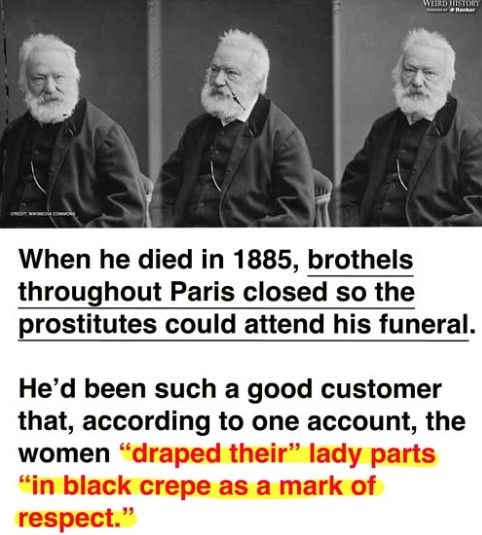
Interesting information, but I wish they would have done a better job in trying to add pictures that remotely had something to do with the information. 555





Hello! It looks like you're interested in this conversation, but you don't have an account yet.
Getting fed up of having to scroll through the same posts each visit? When you register for an account, you'll always come back to exactly where you were before, and choose to be notified of new replies (either via email, or push notification). You'll also be able to save bookmarks and upvote posts to show your appreciation to other community members.
With your input, this post could be even better 💗
Register Login